World EV Day 2026: The Incentives, the Opportunities, and the Direction Fleets Are Heading
Alzbeta Lietava
Electrification Expert
World EV Day 2026: the incentives back on the table, the carbon credits fleets still miss, and where Canada's fleet electrification is heading next.
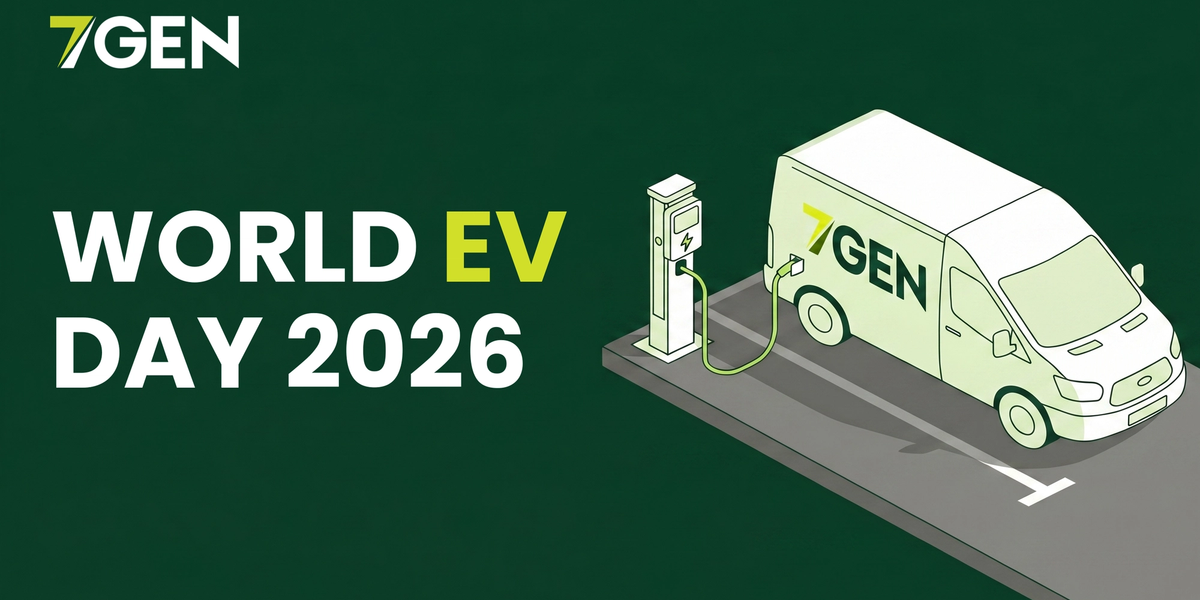
World EV Day 2026 cover image, a 7Gen electric van charging at a depot, marking Canada's fleet electrification progress.
September 9 is World EV Day 2026. This is the seventh year of the campaign, and we're partial to the number ourselves. This year's theme is "Switching Electric: driving down the cost of motoring," a shift from awareness to adoption. Oil prices have climbed to multi-year highs in 2026, and that's pushed the cost argument for EVs further ahead than it's ever been. Fleets aren't switching to make a statement anymore. They're switching because the math works. That's not abstract. It means lower running costs and lower operating costs for any fleet that switches. Fleet electrification is accelerating across Canada, and it's a real journey for the fleet vehicles making the switch, not just a policy talking point.
At 7Gen, we cover three parts of that shift: the vehicles, the charging infrastructure and charging stations, and the carbon credits that come from running them. Most fleet managers never claim that third one. Nobody in the industry walks them through how. Unclaimed credits are the difference between electrification as a cost, and electrification that pays for itself.
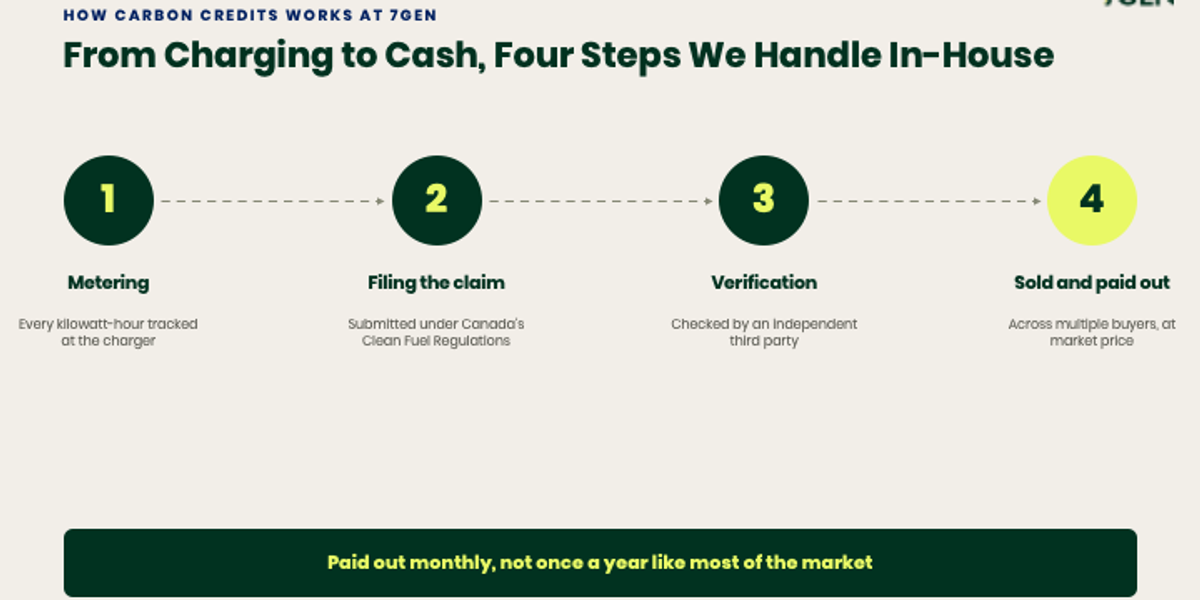
Four-step carbon credit process at 7Gen
Transportation is Canada's second-largest source of greenhouse gas emissions, at 22% of the national total, most of it from burning fossil fuels. About 80% of Canada's electricity comes from clean sources, mostly hydro. Plug in a vehicle here, and you run it on power that's already clean. You aren't shifting the pollution to a power plant somewhere else. Less diesel on the road means reducing emissions and improving air quality in the communities where these fleets operate, and it shrinks the fleet's carbon footprint in a way that's actually measurable, not just claimed.
Here's where things stand: what fleets are still missing on carbon credits, and what we've built alongside it.
The business case hasn't changed. The carbon credit math has.
Cost savings still make the case for switching an EV fleet. Lower fuel costs. Lower maintenance costs. Electric drivetrains have fewer moving parts, fewer scheduled services, less downtime.
The less obvious win comes after the vehicle is on the road. Electric vehicle charging earns credits under Canada's Clean Fuel Regulations every time a fleet plugs in at its own chargers and charging stations. This isn't a grant you apply for and hope gets renewed. It's a standing mechanism built directly out of federal climate change policy, and part of what total cost of ownership actually means once a fleet is running electric. It pays for the gap in carbon intensity between electricity and diesel. In provinces that run their own low carbon fuel programme on top, the same electricity earns twice.
Prices have moved. The average credit reached $358 in June 2026, up from $93 in the first quarter of 2025. Each credit represents one tonne of CO2 equivalent kept out of the atmosphere, a real, measured environmental impact, not an estimate. That's a market that has repriced what a fleet's electricity is actually worth, in revenue and in emissions covered.
Most fleets leave money here. Turning kilowatt-hours into cash takes four steps: metering the energy, filing the claim, third-party verification, and selling the credit. Most of the market gets paid once a year. 7Gen runs all four stages in-house. We pay customers out monthly, not annually. We sell across multiple fuel suppliers and credit aggregators, not through one buyer. That's how a fleet gets the market price, not whatever one counterparty offers that quarter.
If your fleet is charging vehicles and not tracking this, that's revenue sitting unclaimed.
→ See how much your fleet could earn with our Carbon Credit Revenue Estimator.
Where Canada's fleets stand right now
Electric mobility is growing everywhere, not just in Canada. EV sales hit new highs in 50 countries in the second quarter of 2026 alone, with year-on-year growth in more than 90 countries. A survey of 10,157 fleet leaders across 33 countries found 66% already operate electric vehicles, or plan to within three years. The same survey found cost control, not emissions, is now the leading operational challenge as fleets scale up. Meeting sustainability goals is still part of the calculation for most of them, it's just no longer the only argument that works.
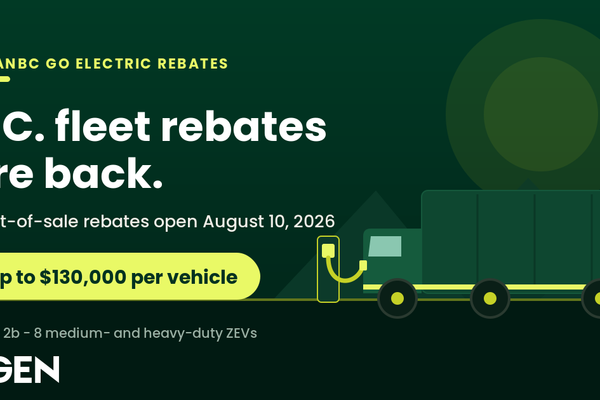
Incentives are moving again. British Columbia's Go Electric programme reopened August 10, 2026, after a year-long pause. Rebates for zero-emission vehicles (ZEVs) in the medium- and heavy-duty class now apply directly at the point of sale. Indigenous organizations, local governments, and non-profits receive a 20% top-up on top of the standard rebate. BC Hydro is investing $700 million of its own to nearly quadruple its charging network by 2035, so the charging infrastructure behind these incentives is being built out too, not just the purchase support.
At the federal level, Ottawa's Automotive Strategy (in English) backs the shift with $2.3 billion in investment over five years, and a stated goal of 75% EV sales by 2035. Government incentives now come from more than one direction: purchase rebates, and accelerated tax benefits for businesses that buy zero-emission vehicles.
Built one fleet at a time
Canada's own numbers back this up, even if the round milestones sometimes floating around don't hold up to scrutiny. Roughly 680,000 electric vehicles were registered in Canada as of 2024, according to Natural Resources Canada and Statistics Canada data. New zero-emission vehicle registrations climbed to 10.8% of all new vehicle sales in the first quarter of 2026, up from 8.7% a year earlier, the first year-over-year increase in more than a year.
We're part of that curve too. We've crossed a real milestone of our own: 500 vehicles deployed across Canadian fleets, and counting, each one replacing a diesel route with an electric one, and each one earning carbon credits instead of leaving them unclaimed.
That's the real point of a day like this. Every fleet that switches shows that cleaner transportation is already working in Canada today, not just an idea for the future. That's why it's worth celebrating on September 9 and every day after.
If you're weighing when to start, get a quote and let's build your fleet electrification plan together. If you're already running electric, use the Carbon Credit Revenue Estimator and see what you could be earning. Either way, join us in building toward a more sustainable future, one fleet at a time.
Ready to Electrify Your Fleet?
Get expert guidance on transitioning to electric vehicles. Our team is ready to help.
Get a Quote