Telematics Explained: From Definition to Fleet Management Software
Telematics explained: what the word means, how a telematic device works, and what fleet telematics does for Canadian commercial operators
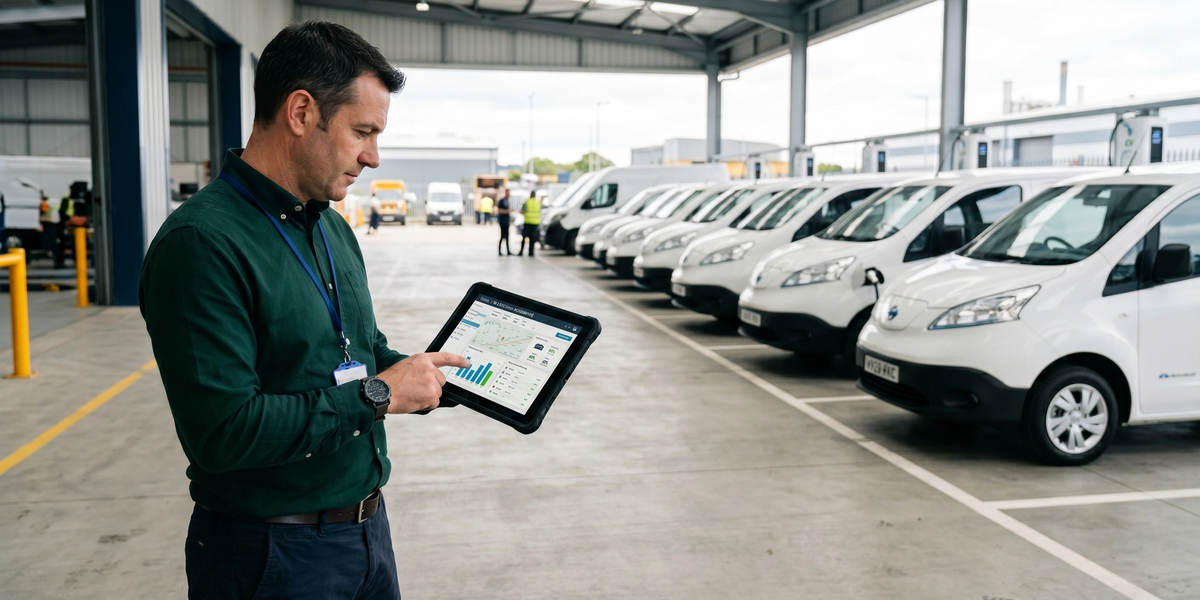
Fleet manager reviewing telematics dashboard on tablet at commercial electric van depot
Telematics has become one of the most referenced technologies in fleet management, yet the word itself is often used without a clear explanation of what it does or why it matters. For Canadian fleet managers evaluating commercial vehicle technology, understanding vehicle telematics is the starting point for better operations, lower costs, and genuine visibility across an entire fleet.
What Is Telematics?
Telematics is a technology that combines telecommunications and informatics to collect, transmit, and analyze data from vehicles in real time. The term covers both the hardware installed in fleet vehicles and the telematics software platform that processes and presents that data to fleet managers.
The telematics definition traces back to the 1970s, when researchers used the term to describe the convergence of computers and telecommunications networks. In the automotive industry, telematics evolved from basic GPS vehicle tracking in the 1990s into today's connected vehicle telematics technology that captures dozens of data points per second. Today, telematics systems are standard across commercial fleets globally, and telematics providers range from hardware manufacturers to full fleet management software companies.
How Does a Telematics System Work?
A telematics system has three components: the device installed in the vehicle, the cellular networks that carry the data, and the telematics software platform where fleet managers view and act on it.
The telematic device is a small hardwired or plug-in unit that connects to a vehicle's on-board diagnostics (OBD) port or CAN bus. Vehicle telematics devices read data directly from the vehicle's systems and transmit data continuously via cellular networks or satellite communication to a cloud-based platform. The Geotab GO device is one example of a vehicle telematics device widely deployed across Canadian commercial fleets.
Data the device collects and sends includes:
- GPS tracking data covering real-time vehicle location, route, and exact location history
- Speed, acceleration, and braking from onboard diagnostics
- Engine fault codes and remote diagnostics signals
- Fuel consumption or, for electric vehicles, battery state of charge and energy use
- Driver behavior data including idling, speeding, and harsh events
That real time telematics data feeds into fleet management software, where fleet managers configure dashboards, run reports, and set alerts for the entire fleet.
What Is Vehicle Telematics in Cars vs. Commercial Fleets?
In passenger cars, vehicle telematics technology is often factory-built by the manufacturer. Systems like GM's OnStar provide individual vehicle owners with location services, connected services, and roadside assistance. This is car telematics in its consumer form, and it is how most people in the automotive industry first encounter the technology.
Vehicle telematics systems for commercial fleets serve a different purpose. Fleet telematics focuses on operational performance across all fleet vehicles: where they went, how they were driven, how much fuel was used, whether vehicle maintenance is due, and whether drivers are operating safely. Fleet tracking and vehicle tracking across a large number of vehicles requires telematics devices installed on every unit, allowing fleet managers to monitor the entire fleet from a single telematics solution.
Commercial vehicle telematics systems are typically aftermarket, meaning telematics providers install the hardware across any mix of makes and models. This is critical for mixed fleets that combine ICE vehicles with electric vehicles under one fleet management software platform.
What Is Fleet Telematics Used For?
Fleet telematics has seven core applications for commercial operators:
GPS tracking and route optimization. GPS technology shows every vehicle's real-time location, enabling dispatchers to assign the most efficient routes, reduce vehicle idling, and improve operational efficiency across fleet operations.
Driver behavior monitoring and driver safety. Telematics systems score fleet vehicles on speeding, harsh braking, and distraction. Targeted coaching based on telematics data improves driver safety outcomes and reduces accident rates.
Vehicle maintenance and preventative maintenance. Engine fault codes and remote diagnostics flag issues before breakdowns. Fleet managers can schedule preventative maintenance proactively, reducing unplanned downtime and vehicle maintenance costs. For EV-specific maintenance patterns, see Fleet Maintenance for Electric Vehicles.
Fuel efficiency and fuel management. Tracking fuel usage per vehicle and per route identifies inefficiencies. Reducing vehicle idling alone can produce meaningful fuel cost savings across a large fleet. For EV fleets, telematics data tracks energy consumption and charging behavior instead.
Asset tracking. Beyond vehicles, telematics solutions can monitor trailers, equipment, and other assets, giving fleet managers visibility over all business operations from one platform.
Insurance and risk management. Insurance companies increasingly use telematics data to offer usage-based insurance programs, where insurance premiums reflect actual driving behavior rather than estimated risk. Fleet operators with strong telematics records can negotiate lower premiums and demonstrate safety compliance to insurers.
Compliance and carbon credit reporting. Telematics generates the data fleet operators need for regulatory compliance and, in Canada, for carbon credit programs under Canada's Clean Fuel Regulations. For a full breakdown of how charging data generates credits, see How to Generate Revenue When Charging Your Electric Vehicle.
What Is Telematics in an EV Fleet?
Electric fleet vehicles generate significantly more operational data than ICE vehicles, and vehicle telematics technology is the system that captures and organizes it. A telematics system on an EV records not just GPS data and driver behavior but also battery state of charge, state of health, charging status, range capability, and energy consumption per trip.
For Canadian fleet managers, this vehicle data is particularly valuable in three areas. Real-time range monitoring during cold weather operations allows dispatchers to assign routes that match actual available range. Fleet telematics software that integrates with charging infrastructure can automate charging scheduling to capture off-peak electricity rates and avoid demand charge spikes. And the verified electricity usage records produced by telematics devices are required to register and claim carbon credits under federal and provincial programs, turning operational data directly into revenue.
Solutions like those offered by 7Gen integrate Geotab vehicle telematics with charging infrastructure management so that vehicle data and charger data sit on the same fleet management software platform. Fleet managers get one view covering vehicle location, battery health, charging status, energy costs, and carbon credit tracking to improve efficiency across the entire fleet.
For a full guide to how telematics functions specifically within an electric fleet, see EV Fleet Telematics: Smarter Data, Better Decisions.
Why Telematics Is the Foundation of Effective Fleet Management
Telematics is not a single feature. It is the data layer that connects every part of fleet operations: vehicle performance, driver safety, fuel costs, vehicle maintenance scheduling, fleet optimization, and emissions reporting, all in one place.
For Canadian fleet managers moving to electric vehicles, that foundation becomes more valuable, not less. EV fleets generate richer vehicle data, and the right telematics solution turns that data into lower operating costs, better route decisions, and new revenue from carbon credits.
At 7Gen, telematics is built into the all-inclusive EV-as-a-Service model from day one, so fleet operators get complete fleet tracking and operational visibility without managing hardware, telematics software, and data separately.
Ready to Electrify Your Fleet?
Get expert guidance on transitioning to electric vehicles. Our team is ready to help.
Get a Quote