Peak Season Vehicle Readiness for Last Mile Delivery Drivers
For independent last mile delivery drivers, the next four weeks represent the most important earning window of the year. Learn how to prepare your EV for peak season success.

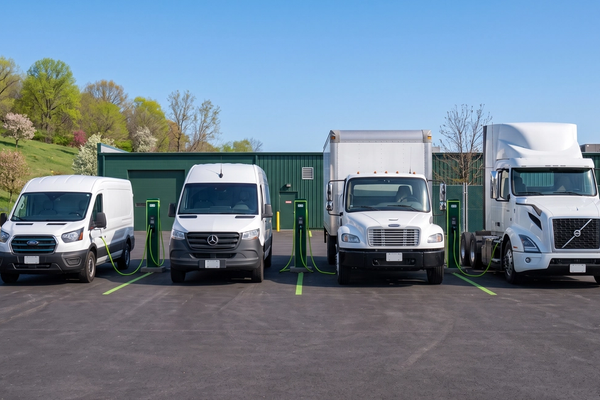
Electric delivery vehicle prepared for peak season last mile deliveries in winter conditions
Peak season is here. Black Friday has passed, Cyber Monday is behind us, and the sprint through Christmas to Boxing Day is on. For independent last-mile delivery drivers and the fleet managers overseeing electric delivery operations, the next four weeks represent the most important earning window of the year.
According to the Pitney Bowes Parcel Shipping Index, parcel volumes in North America typically increase by 30 to 40 percent during the holiday season. In Canada, this surge happens during the coldest weeks of the year, when reliable vehicle performance is essential to capturing peak season earnings. It is also worth noting that the last-mile delivery sector accounts for over 16 percent of total global CO2 emissions, making the shift to electric fleet vehicles both a financial and environmental priority for fleets of every size.
With more contractors and commercial fleets switching to EVs for lower operating costs and simpler maintenance, reliability is a real competitive advantage during the busiest weeks of the year. Electric motors have fewer moving parts and fewer failure modes than internal combustion engine vehicles, but peak season still demands preparation.
Why EV Fleet Maintenance Matters During Peak Season
Independent last-mile delivery contractors face a straightforward equation: when your vehicle is out of service, income stops immediately. For fleet operators managing multiple drivers, that impact multiplies across every vehicle in the electric fleet. During peak season, with volumes up by roughly a third, reducing downtime is the single most important thing you can do to protect earnings.
The good news is that EV fleet maintenance is simpler and more predictable than maintaining ICE vehicles. No oil changes, no exhaust repairs, fewer service intervals, and regenerative braking reduces brake wear significantly. According to a U.S. Department of Energy report covered by Yale Environment 360, electric vehicles cost approximately 40 percent less per mile to maintain compared to gas-powered vehicles. Fleet operators also report 50 percent lower fuel expenses per kilometre compared to diesel alternatives, with annual savings that compound quickly across a vehicle fleet.
Still, peak season puts extra pressure on specific EV systems. Proactive maintenance now prevents costly repairs later, and downtime during peak weeks is far more expensive than any scheduled service.
Mid-Season EV Maintenance Check
If you have not completed a full inspection yet, this week is the time. Three high-volume weeks remain, and routine inspections catch the issues that cause unplanned downtime at the worst possible moment.
Battery Health Monitoring and Thermal Management
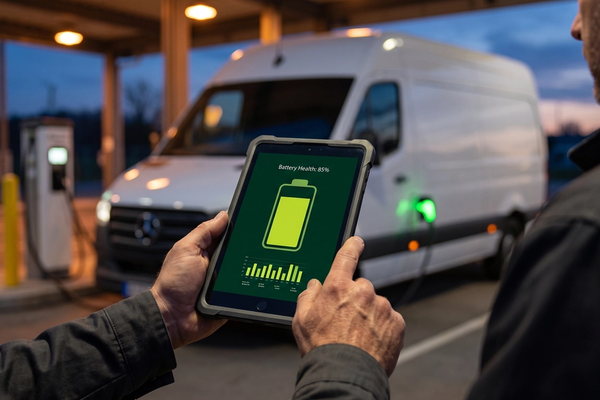
Battery health is the foundation of EV fleet performance. Active battery health monitoring is essential to extend vehicle lifespan, maintain performance, and catch degradation early enough to take action before it causes downtime.
Start by monitoring charging times. If they have increased noticeably, that may signal early battery degradation worth investigating. Cold weather compounds this: AAA research found that at 20 degrees Fahrenheit with HVAC in use, average driving range decreases by 41 percent. Any underlying battery performance issues make that reduction worse.
Equally critical is the thermal management system. In Canadian winters, the battery pack needs to stay within an operating temperature range to deliver optimal performance. Check that battery coolant levels are correct in liquid-cooled battery systems and watch for any temperature-related warning indicators. A battery coolant flush that is overdue is not something you want to discover mid-peak.
Two charging habits that directly extend battery life: avoid frequent DC fast charging during peak weeks where possible, as rapid charging accelerates degradation in certain battery chemistries, particularly NMC and NCA; and maintain a state of charge between 20 and 80 percent. Repeatedly charging to 100 percent or letting the battery drop below 10 percent adds unnecessary long-term stress to the battery pack.
Brake System and Rotor Corrosion
Regenerative braking reduces wear on friction brakes, but it also means brake rotors see less regular use. In Canadian climates where road salt is applied, reduced brake usage creates a specific EV maintenance concern: rotor corrosion. Inspect rotors for surface rust and pitting, especially if the vehicle has been parked or operating primarily in regenerative mode. Check brake pads before volume peaks.
Cabin Air Filter
EV maintenance checklists often skip the cabin air filter, but it matters here. A clogged cabin air filter forces the heating system to work harder, which directly cuts into driving range in cold weather. Check it now and replace if needed before peak weeks begin.
Tires
Peak season driving conditions, extended hours, road salt, and heavy package loads all accelerate tire wear. Check tire pressure when tires are cold; incorrect pressure increases energy consumption and reduces EV range. Inspect tread depth for winter traction.
Lights and Signals
Shorter daylight hours mean more evening driving. Confirm all lighting is fully operational before each shift.
Cabin Heating Strategy
Seat warmers consume far less energy than full cabin heat. Prioritizing them over cabin heating can preserve 10 to 15 percent more range, which is a meaningful difference when cold weather has already reduced your EV range by up to a third.
The Case for Predictive Maintenance
Traditional fleet maintenance runs on fixed calendar-based service schedules. Predictive maintenance works differently: it uses real-time data from vehicles and charging equipment to identify issues before they affect vehicle performance and cause downtime.
Modern fleet management platforms unify vehicle diagnostics with charger management, giving fleet managers proactive visibility based on telemetry data like state of charge, battery temperature, and charging speed trends. Transitioning from calendar-based service schedules to data-driven predictive maintenance consistently reduces unplanned downtime and lowers overall maintenance costs. That is exactly what peak season demands.
For individual EV owners working as delivery contractors, a simplified version applies: track your charging times, range estimates, and any warning messages at the start of every shift. Changes in these numbers are early indicators worth addressing before they become expensive problems.
Managing Cold Weather Range
Cold weather is the biggest variable in EV performance during peak season. Canadian winters bring sustained freezing temperatures, heavy snowfall, and shorter daylight hours. Range anxiety is real, but with the right habits, it is manageable.
Pre-condition while plugged in. Heat your cabin and battery while connected to the charger so grid power does the work, not your battery. Fleet operators in Quebec use remote preconditioning in temperatures that routinely reach minus 20 degrees Celsius to maintain reliable range and efficiency. The same strategy works equally well for individual drivers.
Plan for reduced range. Cold weather reduces driving distance by 20 to 30 percent. Build this into route planning from the start of each shift, not after you notice slower charging or a shorter range estimate.
Know your public charging options. Map at least three fast chargers along your primary delivery routes before each shift. Networks like Flo, ChargePoint, and Electrify Canada operate across the country. Peak season reduces flexibility if your preferred charging station is occupied, and backup locations are not optional during peak fleet operations.
Maintain your charging equipment. Inspect connectors and charging cables regularly for wear or damage. Scheduled inspections of connectors, cables, and charging units are an often-overlooked part of EV fleet maintenance. A charging equipment failure mid-peak causes the same disruption as a mechanical breakdown.
Building Your Peak Season Support System
A prepared support network keeps you working when unexpected issues arise, and during peak season, even small delays compound quickly.
Contacts to have ready:
- Mobile EV technicians who can come to your location
- 24-hour customer support numbers for your charging networks
- Roadside assistance for your specific vehicle model
- Other EV drivers on your routes for real-time charging availability
Essential items for your vehicle:
- Portable tire inflator
- Tire pressure gauge
- Emergency supplies
- Charging adapters for multiple networks
Planning Beyond Peak Season
Once peak season ends, use January and February to honestly evaluate how your EV and your fleet management approach performed. How did cold weather affect your EV range compared to expectations? Which public charging locations proved reliable under heavy demand? Did battery performance hold up through sustained high-volume use?
This evaluation period is also the right time to revisit driver training. Training drivers in EV-specific techniques, including regenerative braking use, preconditioning habits, and smart charging behaviour, meaningfully improves efficiency and reduces maintenance needs across an entire vehicle fleet. Well-trained drivers extend battery life, reduce charging infrastructure strain, and lower the total cost of operating each vehicle over its lifespan.
Successful fleet electrification is not a one-time decision. It requires building the maintenance practices, charging infrastructure, and driver habits that make electric fleet vehicles consistently more profitable than ICE vehicles across their full service life. For a deeper look at how these savings stack up, see 7Gen's Fleet Electrification ROI guide.
Moving Forward
Peak season EV readiness is not about perfect preparation. It is about reducing risk and protecting earning capacity during the most valuable weeks of the year.
Electric vehicles offer real advantages for last-mile delivery: simpler EV maintenance, lower operating costs, fewer failure modes, and predictable performance. Drivers and fleet operators who manage their vehicles proactively through battery health monitoring, smart charging strategies, and routine inspections will be well positioned for long-term success as the electrification journey in last-mile delivery accelerates.
Some operators prefer managing every detail independently. Others use bundled monthly solutions like those offered by 7Gen to simplify EV fleet maintenance, charging infrastructure, and vehicle planning during demanding periods like peak season, removing the complexity so drivers can focus on delivering.
The advantage goes to those who prepare.
Ready to Electrify Your Fleet?
Get expert guidance on transitioning to electric vehicles. Our team is ready to help.
Get a Quote