EV Incentive Questions Answered: A Fleet Manager's Guide to the Electric Vehicle Affordability Program (EVAP)
Knowing which Canadian EV incentives exist is the starting point. This guide answers the operational questions fleet managers face when putting those programs to work, from how leasing affects rebate value and managing multi-province eligibility, to what happens when a program runs out of funding.

Canada electric vehicle incentives shifted significantly in 2025 and 2026, and the federal program that used to anchor commercial fleet planning is gone. This guide answers the questions Canadian fleet managers ask most, with the current status of each program as of June 2026.
The iMHZEV program, which offered up to $200,000 per medium and heavy duty vehicle, ended March 31, 2026. The zero emission vehicles iZEV program for light duty vehicles was officially paused in 2025 when its funding ran out, and has been replaced by the Electric Vehicle Affordability Program (EVAP), launched February 16, 2026 under Prime Minister Mark Carney's federal government, reflecting a continued commitment to climate change policy and incentives for zero emission vehicles. This new program covers light duty vehicles only. For commercial fleets, federal incentives for trucks no longer exist, and the action has moved to provincial incentive programs and carbon credits.
Which Federal Program Applies to Your Fleet?
The answer depends on what your fleet operates.
For light duty assets, passenger cars, SUVs, smaller vans, and pickups under 8,500 lbs GVWR, the vehicle affordability program EVAP applies, with point of sale EV rebates applied by the dealership at purchase or lease (amounts below).
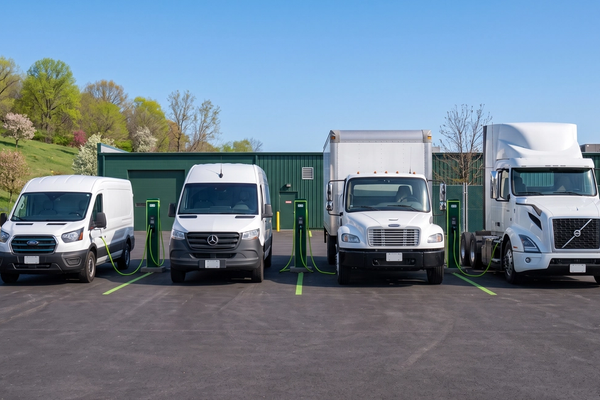
For medium and heavy duty vehicles, Class 2B to 8 trucks and cargo vans above 8,500 lbs, there is no federal purchase incentive after iMHZEV ended. Federal support now runs through the Zero-Emission Trucking Program, which funds safe deployment rather than rebates, so the real savings sit with provincial programs and carbon credits.
What Replaced iMHZEV for Commercial Fleets?
Provincial programs are now the primary purchase incentive for medium and heavy duty fleets. The most significant is British Columbia's CleanBC Go Electric Rebates program, which reopens August 10, 2026 with point of sale rebates of up to $130,000 per vehicle, rising to $156,000 with the top-up for Indigenous communities, local governments, and non-profit organizations. Full details are in our guide: Go Electric Rebates Return August 10, 2026.
Carbon credit revenue fills more of the gap. Fleets running zero emission vehicles generate credits under the federal Clean Fuel Regulations and, in B.C., the Low Carbon Fuel Standard, creating ongoing revenue rather than a one-time rebate. See Unlocking the Economics of EV Fleets with Carbon Credits. For the full national picture, see Canadian EV Fleet Incentives: While They Last.
EVAP vs. iMHZEV: What Changed
EVAP covers light duty vehicles only, caps the final transaction price at $50,000 (no cap on Canadian-built vehicles), allows up to 10 incentives over the program, and its amounts are scheduled to decrease annually starting January 1, 2027. The dealer portal opened March 31, 2026, covering purchases and leases dated February 16, 2026 onward.
The previous zero emission vehicles iZEV program offered up to $5,000 for eligible vehicles until March 31, 2025, using a maximum MSRP cap of $55,000 for base models and $65,000 for higher trims. EVAP instead relies on a final transaction value of $50,000 or less, a key difference when checking which vehicles qualify. iMHZEV, by contrast, paid up to $200,000 per Class 2B to 8 vehicle before it ended March 31, 2026. If you modelled acquisitions around iMHZEV, those numbers no longer apply, so rebuild the plan around provincial programs and carbon credits.
What Vehicles Are Eligible Under EVAP?
EVAP covers new battery electric and fuel cell electric vehicles up to $5,000, and plug in hybrid vehicles up to $2,500. Only new vehicles qualify, including demonstrators with less than 10,000 km, and the vehicle must be made in Canada or a free trade partner country. Chinese EVs are not eligible. Confirm each model on Transport Canada's EVAP vehicle list before ordering, and let drivers test drive shortlisted models, a step many fleets skip that often changes the final choice.
What Counts as a Zero-Emission Vehicle?
A zero emission vehicle (ZEV) has the potential to produce no tailpipe emissions, and three vehicle types qualify. Battery electric vehicles (BEVs) run solely on electricity through an electric motor. Hydrogen fuel cell electric vehicles (FCEVs) make their own electricity from an onboard supply of hydrogen. Plug in hybrid electric vehicles (PHEVs) use both an electric motor and an internal combustion engine, and a PHEV is powered by electricity until its battery range runs out. Federal and provincial rebates apply to BEVs, FCEVs, and PHEVs, but not to regular hybrids.
Leasing vs. Owning
In a purchase, the rebate cuts your upfront outlay; in a lease, it flows to the lessor as lower monthly payments, so confirm how it appears before signing. EVAP incentives are prorated for leases under 48 months, so a 24-month lease captures about half. Financing options for electric vehicles often include special rates and flexible payment plans, a combination that makes EV adoption more accessible. Our EV lease terms guide covers how residual values and incentive financing interact.
The Financial Case Beyond the Rebate
Rebates are only part of the math. Electric vehicles run on electricity rather than gas or diesel, cutting fuel costs sharply for high mileage fleets, and future fuel price volatility strengthens the case. Fewer moving parts mean lower maintenance, with no oil changes and fewer brake replacements. Carbon credits add ongoing revenue, and the federal accelerated capital cost allowance lets businesses write off eligible zero emission vehicles faster, improving cash flow at the beginning of ownership (confirm eligibility with a tax advisor). Together these typically put total cost of ownership 20 to 30 percent below diesel over a five to seven year cycle.
→ Use our free TCO Calculator to compare EV vs. ICE fleet costs for your operation.
Provincial Incentives and Multi-Province Fleets
Federal incentives are stackable with rebates from provincial and territorial governments, though vehicle eligibility can differ between the federal program and some provincial ones. Quebec's Roulez vert offers up to $2,000 for a new EV through 2026, with amounts winding down, and combined with EVAP can reach up to $7,000 on a light duty vehicle, with separate support for used EVs. B.C.'s Go Electric Rebates return for commercial vehicles August 10, 2026, subject to available funding, and B.C. also funds charging infrastructure. Provincial rules change often, so rely on current government pages, and for multi-province fleets, document which vehicle received which rebate and build a funding calendar per jurisdiction. 7Gen's fleet management platform centralises that reporting.
Frequently Asked Questions
Can businesses claim incentives on used zero emission vehicles? EVAP covers new vehicles only. Some provinces offer used EV rebates, but these generally target individual consumers, not commercial fleets. Confirm in each province directly.
How do Canadian winters affect EV range? Cold can cut practical electric range 20 to 40 percent, so size batteries and plan routes accordingly. Pre-conditioning while plugged in and heated depot parking both help.
Can public sector fleets access different incentives? Federal and provincial programs often set aside funding for municipalities, public agencies, and Indigenous communities, sometimes at higher cost-share, and can include depot charging and grid upgrade support.
How many rebates can I claim, and what documentation is needed? Individual consumers are generally limited to one rebate per calendar year, while fleets under EVAP can claim up to 10 over the program. Documentation may include proof of purchase or lease and vehicle eligibility details, and the fleet manager is responsible for confirming eligibility before ordering.
How do I make sure rebates are applied correctly? Agree in writing on who submits applications, ask the dealer to name the exact program and rebate amount on quotes and invoices, and keep all documentation for audits.
Next Steps
Getting full value from Canada electric vehicle incentives now means coordinating EVAP for light duty assets, provincial programs like BC Go Electric Rebates for trucks, carbon credits, and lease structure together. Get a Quote and 7Gen will build a plan around the programs available to your fleet.
Ready to Electrify Your Fleet?
Get expert guidance on transitioning to electric vehicles. Our team is ready to help.
Get a Quote