EVs and the Last-Mile Challenge: Solving Urban Logistics Issues
Last-mile delivery accounts for up to 53% of total shipping costs and roughly 30% of greenhouse gas emissions in cities. For Canadian fleet operators facing tighter urban emissions regulations, electric delivery vehicles offer a practical, proven solution to both challenges.

Cover image
Sustainable last-mile delivery is no longer just a trend. It represents a fundamental shift in how logistics operations are run across Canada and beyond. Last-mile delivery refers to the final leg of the supply chain, moving goods from a distribution hub or distribution center to the end customer. It is the most complex and costly segment of logistics, and the pressure to make it cleaner, faster, and more efficient is growing every year as e commerce continues to expand.
Adopting electric vehicles (EVs) is how forward-thinking fleet operators are reducing operational costs, meeting stricter emissions regulations, and building long-term savings into their operations. The financial and operational case for transitioning away from conventional vehicles and diesel fleets has never been stronger.
Why Urban Last-Mile Delivery Operations Are Under Pressure
City deliveries face unique obstacles. Traffic congestion in urban centers slows delivery vehicles and increases fuel consumption. Emissions mandates are tightening across Canadian provinces and major cities, with low emission zones expanding in Vancouver, Toronto, Montreal, and municipalities across North America. Supportive regulations and incentives are accelerating the transition, while last-mile logistics companies also face growing customer satisfaction demands around delivery speed, reliability, and environmental impact.
Traditional delivery vehicles powered by internal combustion engine drivetrains are increasingly ill-suited for these demands. High carbon emissions, loud engines, and large footprints make them inefficient and costly in dense urban areas. For fleet operators running high-frequency urban routes, the environmental impact and operating costs of diesel fleets compound quickly at scale. Sustainable last-mile delivery is becoming a competitive advantage as clients and shippers demand zero emission transport options.
Key Benefits of EVs for Last-Mile Delivery
Modern electric vehicles (EVs) are designed specifically for last-mile delivery operations. Here is why ev fleets are gaining ground across urban delivery:
Zero tailpipe emissions. Electric delivery vehicles produce no tailpipe emissions and deliver immediate carbon emissions reductions, helping businesses reduce emissions and meet environmental targets across Canadian provinces and urban centers. Eliminating tailpipe emissions also improves urban air quality and supports healthier communities along delivery routes.
Extended delivery hours. Quieter operation allows drivers to make deliveries during early morning, late-night, or weekend windows without disturbing neighborhoods, effectively extending delivery hours and improving vehicle utilization across the last-mile fleet.
Lower operating costs and long-term savings. Electric delivery vans and trucks have fewer moving parts than conventional vehicles, eliminating oil changes, transmission services, and exhaust system repairs. EVs cut operating costs through 50% lower fuel expenses and 40% reduced maintenance costs compared to internal combustion engine ICE vehicles. Regenerative braking extends brake life by 50 to 70%, reducing wear on brake pads and rotors significantly. For a detailed cost breakdown, see EV vs ICE Maintenance Costs: What Fleet Operators Need to Know.
Access to low emission zones. Electric vehicles (EVs) receive unrestricted access to low emission zones and ultra low emission zones across major cities where traditional delivery vehicles face restrictions or congestion charges.
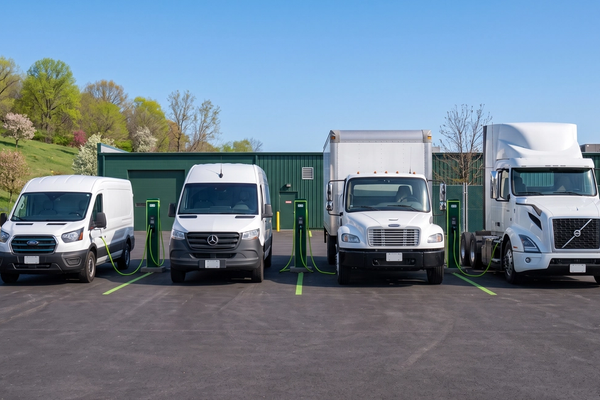
Flexible vehicle options for dense urban areas. Electric delivery vans handle standard parcel delivery routes with generous cargo space and cargo capacity, while electric cargo bikes provide up to 1.6 times higher efficiency than vans when navigating narrow streets in the densest urban environments.
Advances in battery technology have largely addressed range anxiety for urban delivery routes, with most electric delivery vehicles comfortably covering 150 to 250 kilometres per charge on typical city routes.
According to the IEA Global EV Outlook, major logistics companies including Amazon, FedEx, UPS, and DHL are deploying large-scale fleets of electric delivery vehicles specifically for urban last-mile delivery operations, with targets ranging into the tens of thousands of vehicles per operator.
The Financial Case for Sustainable Last-Mile Delivery
The total cost of ownership for electric vehicle delivery fleets is consistently lower than for diesel fleets over their operational lifetime. EVs provide lower operating costs through reduced fuel and maintenance expenses, while upfront costs are increasingly offset by incentive programs available to Canadian businesses, reducing the gap with conventional vehicles substantially.
Federal iMHZEV incentive programs provide up to $200,000 per eligible commercial vehicle for Canadian fleet operators. Provincial incentive programs in British Columbia, Quebec, and Ontario layer additional support on top of federal programs, further reducing upfront costs for businesses transitioning their last-mile delivery operations. Fleet electrification also opens access to carbon credit revenue under Canada's Clean Fuel Regulations, creating an additional income stream that offsets transition costs over time and contributes to long-term savings.
Many fleets find that monthly lease payments for electric vehicles are competitive with or lower than their current fuel and maintenance bills for ICE vans. Electric vehicles can help fleets forecast operational costs with greater certainty due to stable electricity prices compared to fluctuating fossil fuel prices.
→ Use our free TCO Calculator to compare EV vs. ICE fleet costs for your operation.
Charging Infrastructure and Depot Operations
Most last-mile delivery companies operate return-to-depot models where delivery vehicles return to a distribution center or distribution hub at the end of each shift. This makes overnight charging the simplest and most cost-effective approach for last-mile delivery operations.
Proper charging infrastructure ensures adequate power capacity for current vehicles and future fleet growth. Smart charging systems allow fleet operators to schedule sessions during off-peak rate periods, reducing energy consumption costs month over month. For a complete guide to depot charging setup, see Electric Last-Mile Solutions: How Canadian Delivery Fleets Are Cutting Costs and Emissions.
Telematics, Route Planning, and Operational Efficiency
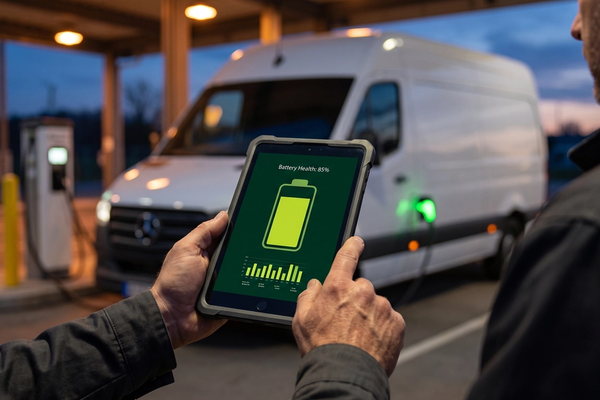
Electric fleet software and telematics systems provide real-time visibility into battery health, state of charge, estimated remaining range, and energy consumption per delivery vehicle. This data allows dispatchers to assign routes based on actual available charge rather than assumptions, improving operational efficiency and reducing unplanned downtime across the last-mile fleet.
Route optimization and route planning tools dynamically adjust delivery routes based on current battery levels, traffic conditions, and delivery windows, reducing range anxiety for drivers and improving operational efficiency across the fleet. Fleet operators can track performance across all vehicles and generate detailed reporting on emissions reductions and cost per delivery. The integration of telematics and machine learning is transforming sustainable last-mile delivery, enabling proactive decision-making and end-to-end visibility for fleet operators.
Building Brand Reputation Through Sustainable Last-Mile Delivery
Electric delivery vehicles serve as visible symbols of a company's commitment to being environmentally responsible. Sustainable last-mile delivery strengthens brand image, builds customer loyalty, and creates a competitive advantage with corporate clients, municipalities, and end consumers who increasingly expect low carbon operations.
Companies that electrify their last-mile operations reduce air pollution in the urban centers they serve, improve urban air quality, and support healthier communities, turning every delivery into a demonstration of environmental commitment. EV adoption helps companies meet corporate sustainability targets and improve brand reputation with shippers and retailers facing growing pressure to report Scope 3 emissions.
Solutions like those offered by 7Gen help Canadian fleet operators manage the full transition to sustainable last-mile delivery, from vehicle selection and charging infrastructure to maintenance, telematics, and carbon credit programs, all under a single monthly cost.
→ Compare EV range, cargo, and payload with our EV Range Comparison tool.
Ready to Electrify Your Fleet?
Get expert guidance on transitioning to electric vehicles. Our team is ready to help.
Get a Quote