When to Take Off Winter Tires: Your Spring Guide for Canadian Drivers
Alzbeta Lietava
Electrification Expert
Find out when to remove winter tires in Canada. Covers the 7°C rule, provincial laws for Quebec, BC and Ontario, and how to check tread depth.
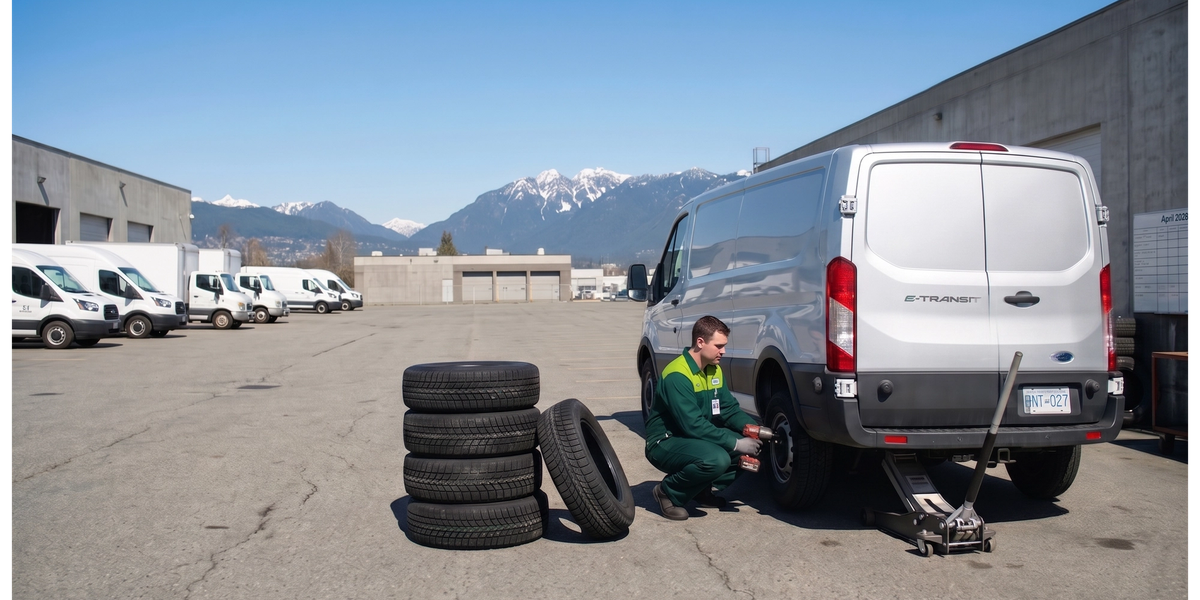
Professional technician performing a tire change at a service center.
Spring is here. Your winter tires have done their job. Now comes the question every Canadian driver and fleet manager faces: when is it safe to take them off and install summer or all-season tires? The answer depends on temperature, winter tire laws in your province, and the condition of the tires themselves.
The 7°C Rule: When Is It Safe to Remove Winter Tires?
The standard guideline across Canada is the 7 for 7 rule: wait until you have seven consecutive days consistently above 7°C before switching to summer or all-season tires. When temperatures drop below 7°C, regular tires harden and lose grip on icy roads and snow covered roads. Above 7°C, winter tires become too soft for warm pavement and wear significantly faster. Leaving winter tires on past the winter season costs you tread you will need next winter.
In most of Canada, the 7°C threshold arrives between late March and early May. In Northern Ontario, Alberta, and the northern interior of British Columbia, cold snaps can push the winter tire swap into May.
Why Winter Tires Work and Why Timing Matters
Winter tires outperform regular tires because the rubber compound stays flexible in cold temperatures, improving traction on icy roads and snow covered roads. Vehicles using winter tires stop up to 25% shorter on snow and ice. Improving traction in winter driving conditions is the core purpose of winter tires. That advantage disappears above 7°C, which is why removing winter tires promptly in spring matters.
Winter Tire Laws by Province: What You Need to Know This Spring
Winter tire laws in Canada vary significantly by province, but using winter tires through the cold season is universally recommended. Here is what each province requires.
Quebec
Under the Highway Safety Code regulation on winter tires, passenger vehicles registered in Quebec must have winter tires installed from December 1 to March 15. The fine for non-compliance ranges from $200 to $300. Winter tire laws in Quebec are among the strictest in Canada. Studded tires are permitted in Quebec from October 15 to May 1.
British Columbia
In British Columbia, winter tires are required on designated highways from October 1 to April 30. Drivers without proper winter tires face fines of approximately $121. Winter tire laws in British Columbia require the mountain snowflake symbol. Studded tires are permitted in British Columbia from October 1 to April 30.
Ontario
Ontario does not legally mandate winter tires for passenger vehicles, but the Ontario government recommends them for improving traction and reducing braking distances in winter conditions. Winter tire laws in Ontario stop short of a mandate. Studded tires are permitted in Northern Ontario but are not allowed in Southern Ontario.
Winter Tire Insurance Discounts
Insurance companies across Canada offer a discount to drivers using winter tires during the winter season, approximately 5% in Ontario. Lower insurance premiums apply for the winter months the winter tires are in use. Insurance companies applying the discount require proof of installation in the fall.
Alberta and Other Provinces
In Alberta, Manitoba, Saskatchewan, and other provinces across central Canada, winter tires are not mandatory. Winter tire laws in these provinces leave the decision to drivers. Temperatures drop sharply in the Northwest Territories, where freezing temperatures arrive earlier than in southern Canada. In the Northwest Territories and other provinces in northern Canada, removing winter tires before late April is uncommon.
Nova Scotia and Atlantic Canada
Nova Scotia, Prince Edward Island, New Brunswick, and other provinces in Atlantic Canada do not mandate winter tires. Winter tire laws in Atlantic Canada are not prescriptive. No Highway Safety Code mandate applies at the federal level. Atlantic Canada sees earlier springs, so earlier changeovers are possible.
Studded Tires: Provincial Rules Across Canada
Studded tires are winter tires with small metal studs embedded in the tread for grip on icy roads. Studded tires are not permitted in all provinces.
Studded Tires in Quebec
Studded tires are permitted in Quebec from October 15 to May 1. All four studded tires must display the mountain snowflake symbol.
Studded Tires in British Columbia
Studded tires are permitted in British Columbia from October 1 to April 30. BC requires a minimum tread depth of 3.5 mm for studded tires, and studded tires in British Columbia must not project more than 1.5 mm beyond the tread surface.
Studded Tires in Ontario
Studded tires are not permitted in Southern Ontario but are permitted in Northern Ontario. Fleet managers with vehicles in both regions should not install studded tires fleet-wide, as using studded tires in Southern Ontario can result in fines.
Studded Tires in Manitoba and Saskatchewan
Manitoba and Saskatchewan permit studded tires during winter months, typically October through April. Both provinces apply tread depth minimums for studded winter tires similar to British Columbia's 3.5 mm requirement. Studded tires should come off promptly when permitted dates end, as leaving studded tires on past the season may result in fines.
What to Inspect at Every Seasonal Changeover
Checking Your Winter Tires Before Storage
Use the toonie test: insert a toonie into the tread groove. If tread falls below the polar bear's paws, replace the winter tires before next season. Replace winter tires below 4 mm tread depth or after six years. Cracking, uneven tread patterns, or bulging are signs to act now. Store winter tires in a cool, dry place away from sunlight.
Checking Your Summer or All-Season Tires Before Fitting
Check tread depth, tire pressure, and sidewall condition before fitting. Pressure drops in storage, so adjust to the manufacturer's specification. For fleet managers, track tread depth and pressure for every unit at each seasonal swap so you identify which need new winter tires before next season.
Tire Pressure and Installation Notes
After every changeover, check tire pressure and tighten lug nuts to the manufacturer's specification using a torque wrench. Retorque lug nuts after the first 50 km. Use a car jack rated for your vehicle's weight. Most Canadian Tire, dealership, and shop locations offer seasonal changeover appointments at low cost.
For fleet managers, stagger changeovers in batches. Track which tires are fitted to which unit, tread depth at last inspection, and rotation history. Four winter tires per vehicle recorded at every swap means nothing falls through the cracks across a large roster.
What Changes for EV Fleets at Tire Season
EVs are heavier than ICE equivalents. Confirm the load rating when selecting winter tires for EVs, as not every winter tire is rated for commercial electric vans. Winter tires carry higher rolling resistance, which reduces EV range in cold temperatures. Removing winter tires in spring recovers meaningful range per charge. Update route estimates after the seasonal swap.
Winter tire laws apply equally to electric and ICE vehicles. The mountain snowflake symbol requirement in Quebec and British Columbia applies regardless of powertrain.
Frequently Asked Questions
Do I need to remove all four winter tires at the same time?
Yes. Removing only two of four winter tires creates a traction imbalance. All four winter tires should come off together. Mixing winter tires with regular tires on the same vehicle is unsafe in any season.
What tires should I put on after removing winter tires?
Most Canadian drivers swap their winter tires for all-season tires in spring. When removing winter tires, summer tires offer better dry-road performance for fleets in southern Ontario, BC's lower mainland, or Quebec. Confirm the correct load rating for your vehicle, especially for heavier EV models.
What should I check on my summer tires before fitting them in spring?
Check tread depth, tire pressure, and sidewall condition on both sets. Confirm pressure matches the manufacturer's specification and run the toonie test on your winter tires before storing them to know whether you need new tires before next season.
When should I buy new tires instead of reusing last season's set?
Replace winter tires below 4 mm tread depth or after six years. A true winter tire should carry the mountain snowflake symbol with no uneven wear. New winter tires outperform worn tires on snow and ice in severe snow conditions. Replace a borderline set before the next winter season rather than relying on worn winter tires when cold temperatures return.
Spring Is Here. Make the Swap at the Right Time.
Removing your winter tires at the right time protects the winter tires and improves fuel efficiency. Using winter tires in winter months and switching promptly in spring saves money on tread wear and lowers insurance premiums through insurance companies' discounts. Solutions like those offered by 7Gen help fleet managers across BC, Alberta, Ontario, Quebec, and Nova Scotia coordinate seasonal changeovers across their full roster.
For fleets making the move to electric vehicles, seasonal tire management is covered in our guide to fleet maintenance for electric vehicles.
→ Use our free TCO Calculator to compare EV vs. ICE fleet costs for your operation.
Ready to Electrify Your Fleet?
Get expert guidance on transitioning to electric vehicles. Our team is ready to help.
Get a Quote