Lease vs Buying EV Fleets in 2026: Which Choice to Make
Leasing and buying an EV fleet each carry different financial implications for Canadian fleet operators. This guide breaks down both options across total cost of ownership, depreciation risk, technology obsolescence, and how Canadian incentives and carbon credits interact with each financing structure.
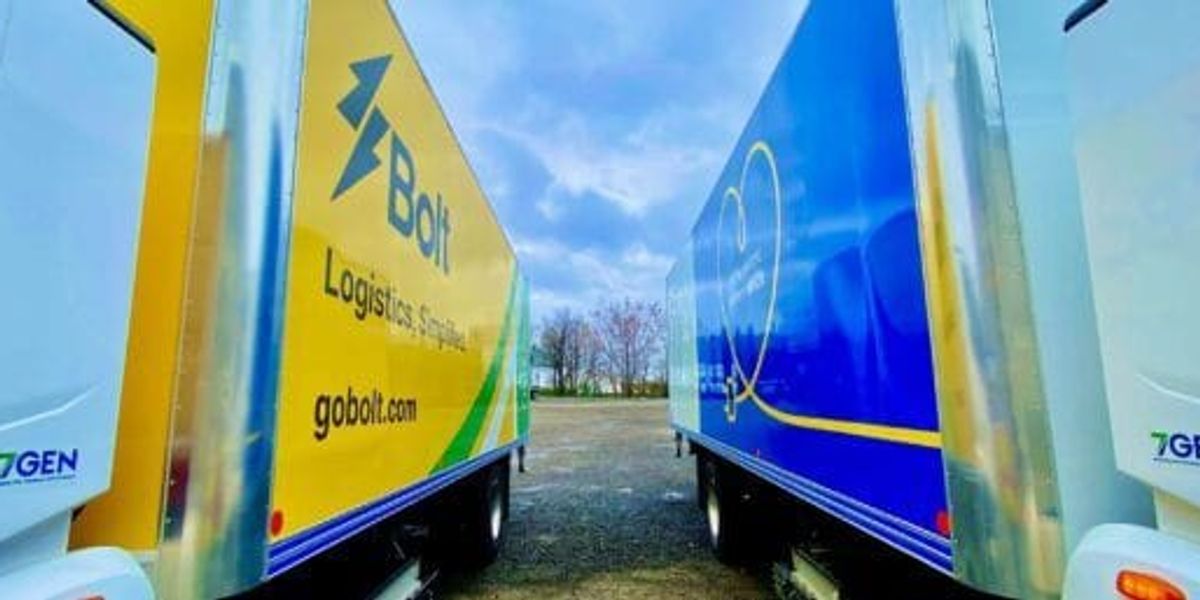
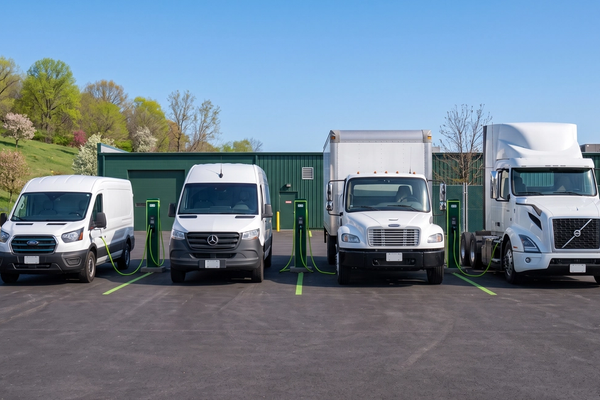
Side-by-side comparison of leased and owned electric delivery vans in a fleet depot with charging stations
For Canadian fleet operators evaluating the transition to electric vehicles, one of the first decisions is how to structure the investment. Should you purchase your electric trucks and charging infrastructure outright, or lease them through a managed program? The ev fleet lease vs buy decision depends on your capital structure, how your businesses manage risk, and how you want to handle a technology that is still evolving rapidly.
This post breaks down the key differences for fleet managers comparing leasing and buying electric vehicle fleet assets, covering upfront costs, depreciation, technology obsolescence, maintenance costs, and how each option interacts with Canadian government incentives, rebates, and tax credits.
What Is the Difference Between Leasing and Buying an EV Fleet?
When you buy electric vehicles and ev charging infrastructure, you own the assets outright. You carry the initial investment on your balance sheet, manage depreciation, and bear full responsibility for maintenance costs, technology decisions, insurance, and eventual disposal. The vehicles are yours, which means both the upside and the downside of ownership fall to your business.
When you lease an electric vehicle fleet, you pay a monthly fee to access vehicles, charging infrastructure, and in many cases software and maintenance support, without owning the underlying assets. At the end of the lease term, you return the vehicles, upgrade to newer models, or exercise a purchase option.
A newer model in Canada is EV as a Service, or EVaaS, where fleet operators access electric vehicles, chargers, energy management, and maintenance under a single monthly cost. This converts a large capital expenditure into a predictable operating cost, which has significant benefits for businesses and companies managing tight capital budgets.
The Case for Leasing an EV Fleet
Lower Upfront Costs
The most immediate benefit of leasing is that it eliminates the large upfront costs required to purchase electric trucks and ev charging infrastructure. Commercial electric vehicles still carry higher initial investment than equivalent diesel alternatives in most categories, and depot charging infrastructure adds further costs depending on site requirements and electrical power capacity upgrades needed.
Leasing converts these capital expenditures into predictable monthly energy costs and operating costs, preserving cash for core business operations. For fleet managers at small and medium sized companies making EVs more accessible, this is often the deciding factor. The long term total cost of operating an ev fleet through a lease is often lower than the combination of purchase price, depreciation, maintenance costs, and infrastructure investment required when buying outright.
Protection Against Technology Obsolescence in the Future
EV battery technology, charging standards, and fleet management software are all evolving rapidly. A vehicle purchased today may have significantly lower range, slower charging capability, or less capable telematics than equivalent models available in three to five years. When you own your electric fleets, you carry that technology risk entirely.
Leasing protects against obsolescence by allowing fleet managers to upgrade to newer vehicle models at the end of each lease term. This is particularly valuable during the current period of rapid EV development, where battery energy density is improving and new commercial vehicle models are entering the market each model year. For eco friendly businesses with sustainability commitments, staying current with the latest zero emission technology also supports ongoing carbon footprint reduction goals.
Reduced Depreciation Risk
EV residual values remain difficult to predict with confidence. Battery degradation rates, government incentive changes, and the rapid pace of new model releases all affect the resale value of electric trucks in ways that are hard to model at time of purchase. Owning your fleet means absorbing that depreciation uncertainty directly.
Leasing shifts residual value risk to the lessor. Your monthly payment is based on a defined depreciation schedule, and at lease end you are not exposed to whatever the used EV market delivers. For companies operating large electric commercial vehicle fleet assets, this protection against depreciation uncertainty is a meaningful financial benefit.
Maintenance Costs and Support Included
Many commercial EV leasing programs, including EVaaS models, bundle maintenance costs, telematics, and technical support into the monthly cost. This eliminates the need for fleet managers to develop in-house EV maintenance expertise, manage parts inventory, and source specialized technicians, which is a significant challenge particularly for businesses outside major urban centers.
For a detailed look at what EV maintenance involves compared to diesel, see EV vs ICE Maintenance Costs: What Fleet Operators Need to Know.
Route Optimization and Operational Benefits
Managed EV leasing programs typically include integrated telematics and fleet management software that supports route optimization, charging schedule management, and energy consumption tracking. These operational benefits reduce total cost further and give fleet managers visibility into their electric fleets that is difficult to replicate when managing purchased assets independently. Optimizing fuel consumption through smart charging and route planning also reduces electricity costs over time, improving the long term economics of the ev fleet.
The Case for Buying an EV Fleet
Long Term Cost of Ownership
For fleet operators with strong balance sheets and a long planning horizon, purchasing electric vehicles can deliver a lower total cost of ownership over time. Once the initial investment is recovered, you are no longer paying a lease premium and the vehicles continue to generate value through lower operating costs relative to diesel alternatives.
Electric vehicles have fewer moving parts, no oil changes, no exhaust systems, lower fuel costs, and more stable energy costs than gasoline or diesel equivalents. Combined with lower insurance costs for some vehicle classes and stable electricity pricing, these savings compound significantly over a 10 to 15 year operational life. The power of compounding fuel and maintenance savings over a long planning horizon is the strongest argument for buying for companies that can manage the upfront costs and associated risks.
Asset Control and Flexibility
Owning your fleet gives you full control over how vehicles are used, modified, and disposed of. There are no mileage restrictions, no lease terms to navigate, and no dependency on a third party for operational decisions. For fleet managers with highly specialized duty cycles or unusual route structures, this flexibility can be valuable.
Tax Credits, Rebates, and Incentive Capture
Some Canadian government incentives, rebates, and tax credits for commercial EV purchases are structured as point of sale incentives tied to the purchasing entity. Fleet operators who buy their vehicles directly may be better positioned to capture certain government incentives than those using lease structures, depending on program terms. This is worth examining carefully before committing to either path, as program structures vary.
For a full overview of Canadian fleet incentive programs, see What You Need to Know About Canadian EV Fleet Incentives.
How Carbon Credits Interact With Leasing vs Buying
Carbon credit revenue under Canada's Clean Fuel Regulations is an ongoing consideration for both leasing and buying. Fleet operators who manage their own ev charging infrastructure and meter electricity consumption can generate carbon credits regardless of whether they own or lease the vehicles themselves. This creates an additional revenue stream that improves the economics of fleet electrification transition over time for both structures.
For a detailed breakdown of how carbon credits work alongside fleet financing, see Unlocking the Economics of EV Fleets with Carbon Credits.
Which Is Better for Most Canadian Fleet Operators?
For the majority of Canadian commercial fleet operators and businesses making EVs part of their transition plan, leasing or an EVaaS model offers the more practical path to fleet electrification for several reasons.
It converts a large, uncertain initial investment into a predictable monthly operating cost. It protects against technology obsolescence during a period when EV specifications are improving rapidly. It eliminates residual value risk in a market where used EV pricing remains uncertain. It bundles maintenance costs and technical support that most fleet managers are not yet equipped to handle in-house. And it preserves capital and power to invest in core business operations rather than depreciating fleet assets.
Buying makes more sense for larger operators with strong balance sheets, long planning horizons, in-house technical capability, and high confidence in their vehicle selection and duty cycle match. Companies with existing fleet ownership infrastructure and the internal resources to manage electric vehicles independently may find the long term economics of ownership compelling.
7Gen works with Canadian commercial fleet operators to evaluate both paths and structure the financing model that best suits their operational needs, capital position, and transition timeline. For a step-by-step overview of the full transition process, see Planning and Executing an EV Fleet Transition.
→ Use our free TCO Calculator to compare EV vs. ICE fleet costs for your operation.
Ready to Electrify Your Fleet?
Get expert guidance on transitioning to electric vehicles. Our team is ready to help.
Get a Quote