How to Generate Revenue When Charging Your Electric Vehicle
Learn how EV fleet charging can generate revenue through carbon credit programs like CFR, LCFS, and more. Turn every kilowatt-hour into financial returns.
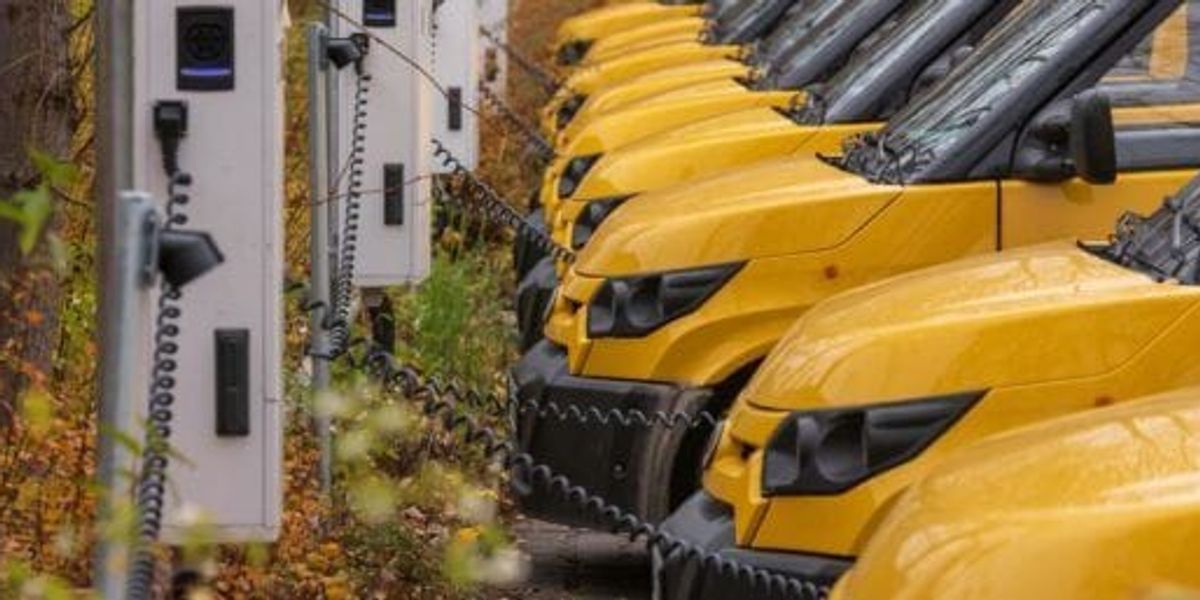
Electric fleet vans charging at a depot, illustrating how EV charging can generate revenue through carbon credits
Every time an electric fleet vehicle charges, it generates data that can be converted into tradable carbon credits. For Canadian businesses operating zero-emission vehicles, EV charging revenue is a real and trackable income stream available under both federal Clean Fuel Regulations and provincial programs like British Columbia's Low Carbon Fuel Standard. Learn how fleet operators are turning every kilowatt-hour into measurable financial returns, and how businesses with public EV chargers are building additional revenue streams through charging fees, loyalty programs, and customer foot traffic.
What Is EV Charging Revenue and Why Does It Matter
The Revenue Opportunity Behind Every Charge
Every time an electric fleet vehicle charges, it generates data that can be converted into tradable carbon credits. For a business running a fleet of commercial vehicles, this means EV chargers are not just an operational investment. They are a source of ongoing income that runs in parallel with daily operations, helping to offset upfront costs and reduce total cost of ownership over time.
There are two distinct ways to earn revenue from EV charging. The first is through carbon credit programs — available to fleet operators running zero-emission vehicles under federal and provincial clean fuel regulations. The second is through charging fees — available to businesses, property owners, and retail locations that install public or semi-public EV charging stations and charge EV drivers per session, per kilowatt-hour, or per hour. Understanding both models helps businesses assess which revenue stream, or combination of streams, fits their operation.
According to the IEA Global EV Outlook, light commercial electric vehicles typically consume between 0.31 and 0.42 kWh per kilometre depending on route, load, and driving conditions. A van operating 25,000 km per year uses approximately 7,750 to 10,500 kWh annually. Across a fleet of electric medium and heavy-duty vehicles or light commercial vans, that energy consumption translates into a significant and verifiable volume of carbon credits that businesses can sell on regulated markets.
Revenue Stream 1: Carbon Credits From Fleet EV Charging
How Carbon Credits Work
Carbon credits are tradable certificates that each represent the verified reduction of one metric ton of carbon dioxide equivalent (CO2e). In the context of fleet electrification, credits are generated when EV charging demonstrably displaces fossil fuel use and reduces greenhouse gas emissions compared to conventional counterparts running on gasoline or diesel.
Credits are calculated based on three factors: the amount of electricity consumed in kWh by EV charging stations, the carbon intensity of that electricity, and the baseline emissions of the diesel or gasoline being displaced. Credits are tracked through networked EV chargers that report energy delivery data in real time. Once a registered creator submits verified reports, those credits can be sold to fuel suppliers that are obligated to pay for offsets to meet their annual carbon intensity reduction requirements.
The more your fleet charges using low-carbon clean energy, the more credits you generate and the more monthly revenue you earn.
Canada's Main Carbon Credit Programs for EV Fleets
Federal Clean Fuel Regulations
Canada's Clean Fuel Regulations (CFR) came into full effect on July 1, 2023. Administered by Environment and Climate Change Canada, the CFR requires gasoline and diesel suppliers to progressively reduce the carbon intensity of transportation fuels, targeting a 15% reduction below 2016 levels by 2030. The transportation sector accounts for approximately 24% of Canada's total greenhouse gas emissions, making this program one of the most significant regulatory levers for reducing emissions at scale.
Businesses that operate EV charging stations for fleet use can register as credit creators under the CFR and generate carbon credits by displacing low-carbon electricity in place of diesel fuel. These credits are traded through the federal Credit and Tracking System (CATS) and purchased by fuel suppliers that cannot meet their annual obligations independently. The CFR applies nationwide, meaning fleet operators in every Canadian province can claim credits and participate in the federal program.
British Columbia Low Carbon Fuel Standard
British Columbia's Low Carbon Fuel Standard (LCFS) has been in place since 2013 and operates alongside the federal CFR. BC fleets have a significant advantage: they can stack provincial LCFS credits with federal CFR credits, potentially generating direct revenue through both programs from the same kWh of electric vehicle charging. EV charging stations in BC can claim credits under both frameworks simultaneously, making British Columbia one of the strongest markets in Canada for EV charging revenue. For context on recent credit pricing, see Canada's CFR Credits Hit Historic $400 Milestone.
Other Programs and Government Incentives for Canadian Fleets
Quebec and California participate in the Western Climate Initiative (WCI), enabling cross-border credit trading. US state programs including California's LCFS, Oregon's Clean Fuels Program, and Washington's Clean Fuel Standard offer equivalent opportunities for zero-emission vehicles operating cross-border. On the infrastructure side, the federal Zero Emission Vehicle Infrastructure Program (ZEVIP) can help offset the upfront cost of installing EV chargers, covering between 50 and 75 percent of eligible project costs and improving the overall financial case. ZEVIP runs through March 31, 2027, and funding is committed on a rolling basis, so confirm current intake status before applying. Rebate stacking and incentive eligibility across programs vary by jurisdiction and should be assessed carefully before projecting revenue.
What Businesses Can Realistically Expect
Using an average consumption of 0.35 kWh per km over 25,000 km per year, a single commercial electric vehicle generates approximately 8,750 kWh annually through EV charging. Industry estimates put federal CFR credit values at roughly $0.16 to $0.47 per kWh based on recent market activity, though credit values fluctuate based on supply, demand, and policy changes.
For British Columbia businesses, stacking provincial LCFS credits with federal CFR credits from the same EV charging activity could generate between $3,500 and $5,500 per vehicle per year at current market rates. For fleets in other provinces, the federal CFR program still provides meaningful carbon credit earnings, with actual payouts depending on local grid carbon intensity and current credit market conditions.
These figures are estimates. Carbon credit markets are subject to volatility and regulatory updates, and actual earnings will vary. Fleet managers should verify current credit values and program eligibility before projecting revenue into financial planning.
Revenue Stream 2: Charging Fees From Public EV Charging Stations
How Businesses Make Money From EV Charging Fees
Installing public EV charging stations is a proven way for retail locations, commercial properties, parking operators, and hospitality businesses to earn revenue from EV drivers. Rather than offering free charging as a simple amenity, a growing number of businesses are adopting structured pricing strategies that generate additional income from every charging session.
Charging fees can be structured in several ways:
- Per kWh — the most transparent model for EV owners, billing based on electricity consumed during each charging session
- Per hour — common where charger throughput is a concern, incentivizing EV drivers to move on after charging
- Per session — a flat fee per visit, simpler to administer but less precise
- Subscription or loyalty program tiers — monthly revenue models that reward regular customers with reduced rates in exchange for predictable volume
The right pricing strategy depends on your location, the types of EV chargers you install (Level 2 vs. DC fast charger), your energy costs, and how much foot traffic you want to drive versus how much direct revenue you want to generate.
The Customer Attraction Case: More Than Charging Fees
Beyond direct revenue from charging fees, ev charging capabilities attract more customers and increase dwell time — particularly at retail locations, restaurants, and service businesses. EV owners typically spend 20–45 minutes at a Level 2 charging station, creating a natural opportunity to drive in-store purchases, increase average transaction values, and build customer loyalty.
For businesses with the right location and demographic mix, the indirect revenue impact of EV charging can exceed the direct charging fees. Fleet operators visiting your site to charge their vehicles become repeat customers. A well-placed DC fast charger at a highway-adjacent or high-traffic commercial location can attract EV drivers who would otherwise pass by, converting charger visits into new customers and building a loyalty program around the charging experience.
Free charging, offered as a promotional model, can also be part of the strategy — particularly during launch periods or to build initial EV driver awareness of a location.
Optimizing Charging Revenue With Smart Tools
Modern EV charging infrastructure includes mobile app integrations that let businesses manage pricing in real time, monitor energy usage by charging session, and adjust rates for off-peak hours to reduce electricity costs. Scheduling high-demand charging sessions during off-peak hours — when grid electricity rates are lower — is one of the most effective ways to protect margins while keeping EV charging stations profitable.
Networked EV chargers with OCPP 1.6 or higher compliance give operators the data visibility needed to track energy consumption, billing, and charger availability across multiple sites from a single dashboard. This level of reporting is also required to participate in carbon credit programs, meaning the same infrastructure investment supports both revenue streams simultaneously.
The cost of installing ev chargers varies by site — electrical upgrades, trenching, and panel capacity are the main installation cost variables. A business model that layers carbon credit revenue with charging fees can significantly reduce the time to recover those upfront costs.
How 7Gen Manages EV Charging Revenue for Canadian Fleets
Carbon Credits, Charging Infrastructure, and the Full Revenue Picture
Carbon credit programs involve tracking energy usage across EV charging stations, registering with credit systems, managing reporting timelines, and selling credits into fluctuating markets. 7Gen handles this process for Canadian commercial fleets by tracking electricity consumed with verified data from networked EV chargers, registering and managing credits under applicable clean fuel regulations, identifying the best monetization opportunities across programs, and aligning credit generation with each fleet's operational profile.
Because the ability to generate EV charging revenue depends on reliable, networked charging infrastructure, 7Gen also designs, installs, and manages depot charging systems that maximize both operational efficiency and carbon credit earnings. Installing EV charging stations with the right electrical infrastructure from the start — rather than retrofitting underspecified equipment — reduces long-term costs and avoids electrical upgrades that disrupt operations. For a full guide to planning and deploying depot charging infrastructure, see EV Fleet Charging: The Complete Guide to Deploying Charging Infrastructure for Commercial Fleets.
For a full breakdown of the economics of fleet electrification including government incentives and carbon credits, see Unlocking the Economics of EV Fleets with Carbon Credits.
Why Canadian Businesses Should Act Now
The Window for Early EV Adoption
Canada's clean fuel regulations and carbon credit markets are still maturing. The federal CFR only came into full effect in 2023, and credit market dynamics will shift as more businesses participate and as annual carbon intensity reduction targets tighten toward 2030. Early participants establish registration, reporting infrastructure, and market relationships before competition for credits increases and program rules tighten.
Fleets in British Columbia and Ontario are already generating measurable EV charging revenue from carbon credit sales. As clean fuel standards expand and EV adoption accelerates, the revenue potential from EV charging stations will likely grow. Businesses that invest in zero-emission vehicles and networked charging infrastructure now are building an asset that generates income, reduces emissions, and positions the fleet for long-term cost competitiveness. More businesses entering the market now also benefits from higher per-unit carbon credit values before market saturation.
Every kilowatt-hour your fleet consumes is a trackable, monetizable unit of clean energy. The programs exist. The infrastructure is available. The question is how quickly your business can assess the opportunity and act on it.
Ready to Electrify Your Fleet? Get expert guidance on transitioning to electric vehicles. Get a Quote
Ready to Electrify Your Fleet?
Get expert guidance on transitioning to electric vehicles. Our team is ready to help.
Get a Quote