Health and Environmental Benefits of Fleet Electrification
Diesel exhaust from commercial trucks causes hundreds of premature deaths annually in Canadian cities and is classified as a Group 1 carcinogen by the World Health Organization. Fleet electrification eliminates tailpipe emissions, reduces noise pollution, improves driver wellbeing, and strengthens your ESG position, all while cutting fuel and maintenance costs.

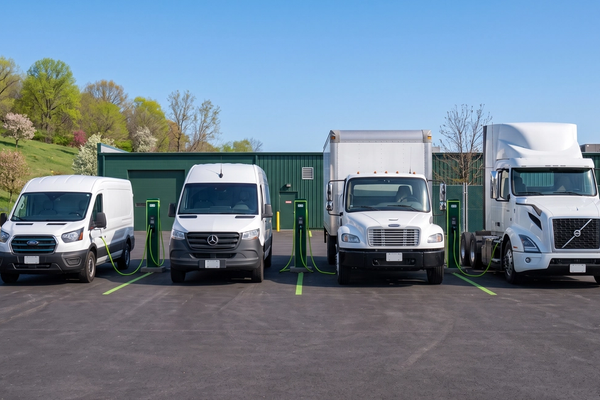
Electric vehicles on a highway.
By now you likely know about the financial benefits of electrifying your vehicle fleet, from maintenance costs savings of up to 60% and energy costs reductions of up to 80% to provincial and federal government incentive programs. But the environmental benefits of fleet electrification go far beyond saving money. Fleet electrification is about reducing environmental impacts and improving health outcomes for both truck operators and the communities they serve. Fortunately, these goals share a bottom line.
What Are the Environmental Benefits of Fleet Electrification?
The environmental benefits of fleet electrification are significant across every dimension of commercial transportation. Diesel engines in heavy duty vehicles are among the largest sources of air pollution, greenhouse gas emissions, and particulate matter in Canadian cities. Transitioning a vehicle fleet from diesel fuel to electricity produces significant reductions in GHG emissions, tailpipe emissions, and toxic diesel exhaust across every route the fleet operates.
A study by Geotab and Enterprise Fleet Management found that near-term electrification of an entire fleet could save as much as 194,000 tons of CO2 emissions over four years while delivering $33 million in total cost savings. Operational greenhouse gas emissions can be reduced by 50% or more compared to internal combustion alternatives, and zero emission vehicles eliminate tailpipe emissions entirely, improving air quality across urban centers and transportation corridors alike.
How Does Diesel Exhaust Harm Public Health?
The health case for reducing diesel exhaust from commercial trucks and buses is well established. The World Health Organization classifies diesel exhaust as a Group 1 carcinogen, linking both short term exposure and long term exposure to serious health consequences including lung cancer, cardiovascular disease, and respiratory illness.
The Environmental Protection Agency identifies diesel exhaust and particulate matter from diesel engines as among the most harmful air pollutants in urban environments. Short term exposure to diesel exhaust causes eye irritation, headaches, and aggravated asthma symptoms. Long term exposure to diesel exhaust is associated with lung cancer, chronic bronchitis, and reduced lung function, particularly in communities located near major transportation routes and freight corridors.
Research from the Ontario Public Health Association and Environmental Defence found that heavy duty vehicles are responsible for the majority of nitrogen oxides and black carbon emissions in the Greater Toronto and Hamilton Area, accounting for almost 50% of all traffic pollution related fatalities. The study found that electrifying all trucks in the GTHA could result in 275 fewer annual deaths from traffic related air pollution. Large and dense urban centers with poor air quality would especially benefit from switching their vehicle fleet to zero emission vehicles.
How Do Electric Vehicles Reduce Air Pollution?
Electric vehicles eliminate diesel exhaust entirely at the point of operation. Unlike diesel engines, which rely on combustion of diesel fuel and produce particulate matter, nitrogen oxides, and carbon emissions through their engines, electric motors produce zero tailpipe emissions during operation. There are no spark plugs, no diesel fuel combustion, and no exhaust systems to maintain, which means no diesel exhaust entering the air along delivery routes or in urban freight corridors.
Transitioning a vehicle fleet to electric technology reduces GHG emissions, particulate matter, and diesel exhaust on every route the fleet operates, producing significant reductions in local air pollution. Fleet electrification also supports the Government of Canada's emissions reduction targets, which call for a 40 to 45% reduction in economy-wide greenhouse gas emissions below 2005 levels by 2030. Health Canada estimates that heavy duty vehicles contribute to approximately 63% of premature deaths from traffic related air pollution across Canada, making fleet electrification one of the highest-impact actions available to reduce emissions and improve public health outcomes.
Noise Pollution: A Hidden Health Cost of Diesel Fleets
In addition to diesel exhaust and air pollution, ICE vehicles, especially heavy duty vehicles like large trucks and buses, are responsible for significant noise pollution in busy urban areas. The health consequences of noise pollution include elevated blood pressure and cardiovascular risk from chronic exposure, cortisol release from sudden loud noises that weakens immune system performance even during sleep, poor mental health outcomes including anxiety and irritability, and sleep disruption for residents near major transportation routes.
Electric vehicles are far quieter than diesel alternatives. According to the Edmonton Trolley Coalition, electric buses produce 60 to 70 decibels of noise compared to 80 to 85 decibels from diesel buses. That reduction has a measurable impact on community health, driver wellbeing, fleet performance, and quality of life along freight and transit routes.
How Does Fleet Electrification Improve Driver Health and Wellbeing?
The environmental benefits of fleet electrification extend directly to the drivers who operate these vehicles every day. In NACFE's Run on Less Electric report, drivers reported lower fatigue levels and a significantly better driving experience with EVs compared to diesel trucks. Key improvements included lower interior and exterior cabin noise, better acceleration from the electric motor, improved air conditioning performance, no diesel smell in the cab, and the simplicity of overnight depot charging compared to 30-minute diesel fuel stops.
These improvements in driver working conditions have a direct positive impact on fleet performance and driver retention. Businesses that operate electric vehicle fleets give their employees a work environment that supports health, comfort, and productivity. A survey by Unily found that 83% of workers believe their employers should be doing more to combat climate change, and 65% said they would be happier working for a company with strong environmental policies. Transitioning to zero emission vehicles is one of the most visible and credible ways a business can demonstrate that commitment to its employees.
Passengers benefit too. Patrick Gervais, VP of Lion Electric, Canada's largest manufacturer of commercial zero emission vehicles, noted that students are calmer and more focused when they arrive at school in a quiet electric bus. Despite the clear health and environmental benefits, less than 1% of North American school buses are currently electric, representing a significant opportunity for municipalities and fleet operators to reduce diesel exhaust exposure along school routes.
ESG, Carbon Footprint, and Market Position
Fleet electrification strengthens the business case on multiple fronts beyond fuel efficiency and scheduled maintenance costs. Consumers and shippers are increasingly tracking carbon footprint performance and incorporating sustainability targets into procurement decisions. Today's Trucking reports that one in three RFPs now incorporate sustainability requirements, with sustainability described by one trucking firm as essential rather than optional.
Businesses that reduce emissions through fleet electrification can track and report their carbon footprint reductions with auditable data, satisfying ESG disclosure requirements and attracting clients who prioritize sustainable transportation. A February 2021 survey found that 89% of people expect companies to do more to reduce their carbon footprint, while 82% want businesses to prioritize the health of the planet. Early adoption of electric technology also positions businesses as leaders in their market, building credibility with clients and employees who evaluate companies on their environmental commitments.
For a full breakdown of the financial incentives available to Canadian fleet operators, see What You Need to Know About Canadian EV Fleet Incentives.
Electricity vs Diesel: The Total Cost and Environmental Picture
The total cost and environmental performance of electric vehicles versus diesel engines favours electrification across every measure that matters to Canadian businesses and fleet operators. Electricity costs per kilometre are lower and more stable than diesel fuel costs. Scheduled maintenance costs are significantly lower due to fewer moving parts and no diesel engine servicing. GHG emissions, diesel exhaust, and particulate matter are eliminated from operational routes. And range anxiety is no longer a significant barrier for most urban and regional delivery routes given the performance of current battery technology.
Getting Started with Fleet Electrification
Reducing diesel exhaust, improving air quality, lowering your carbon footprint, and improving driver health outcomes are all achievable through a structured approach to fleet electrification. 7Gen works with Canadian businesses to transition their vehicle fleet to electric vehicles through an all-inclusive monthly model covering vehicles, charging stations, energy management, and maintenance. Contact 7Gen to build a fleet electrification plan suited to your operational needs, routes, and sustainability goals. For a step-by-step transition framework, see Planning and Executing an EV Fleet Transition.
Ready to Electrify Your Fleet?
Get expert guidance on transitioning to electric vehicles. Our team is ready to help.
Get a Quote