Fleet Service: How Canadian Fleets Can Cut Downtime and Prepare for Electrification
Alzbeta Lietava
Electrification Expert
A structured fleet service program reduces downtime, controls parts costs, and prepares your Canadian commercial fleet for electrification.

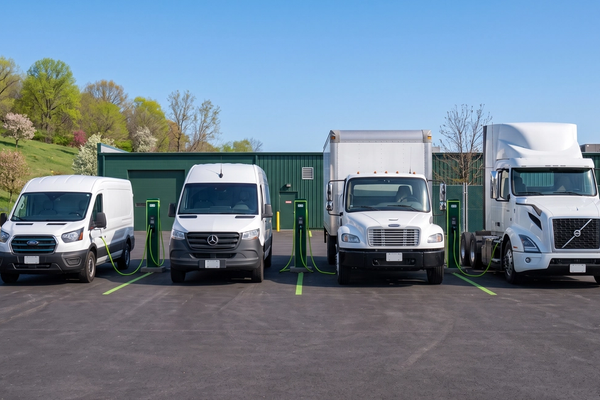
Fleet managers discussing fleet electrification and EV charging infrastructure in Canada.
Fleet service covers everything required to keep commercial vehicles safe, compliant, and operational. For Canadian fleet managers, a structured fleet service program is the difference between vehicles that run reliably and a costly cycle of unplanned repairs.
Key Takeaways:
- Unplanned repairs cost significantly more per incident than scheduled maintenance, including emergency labour, expedited parts, and lost operational revenue.
- Electric vehicles cost up to 40% less to maintain than diesel equivalents, but require new service capabilities for batteries and charging systems.
- Certified technicians in Canada hold Red Seal or ASE credentials for commercial vehicle work.
- Maintenance requirements vary by province, vehicle type, and operating conditions.
- 7Gen provides fleet services across Canada, from BC and Alberta to Ontario and Quebec, with programs built around your specific business needs.
What Fleet Service Includes
A complete fleet service program covers scheduled preventative maintenance, reactive repairs, parts management, safety inspections, and compliance documentation across Canadian provinces.
Core services in a structured fleet maintenance program include:
- Preventative maintenance: oil changes, filter replacements, fluid checks, and interval-based services
- Routine maintenance: tire rotation, brake inspection, and lighting checks
- Mechanical repairs: engine diagnostics, transmission services, and drivetrain work
- Safety and compliance inspections aligned with provincial requirements
- Parts sourcing to reduce repair turnaround and minimize downtime
- Fleet management records tracking service history across all vehicles
- Fuel management: tracking consumption and costs across the fleet to control spending and prevent misuse
- Driver behaviour monitoring: real-time oversight of speed, braking, and idle time that reduces accidents and can lower insurance premiums
Businesses across Canada, from Vancouver and Edmonton to Toronto and Montreal, use programs that offer a broad range of support, from day-to-day maintenance to complex repairs, designed to accommodate the specific business needs of commercial operations in every region.
Typical Service Intervals by Vehicle Class
Maintenance schedules vary across the vehicle types most common in Canadian commercial operations.
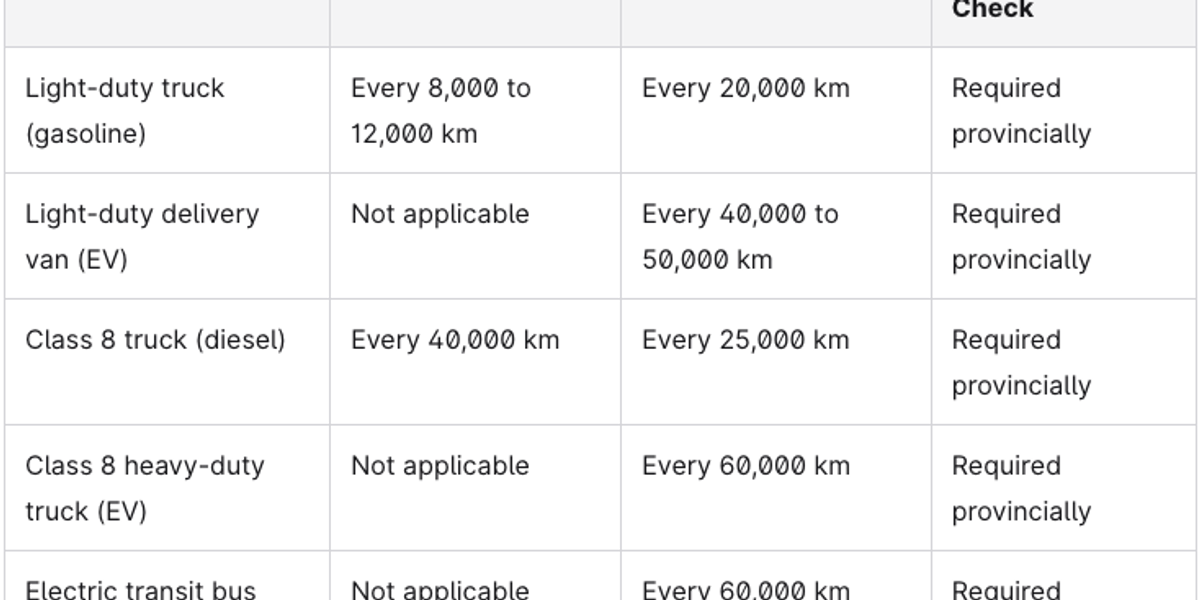
Table: service intervals by vehicle class
Canadian commercial fleets span a wide range of vehicle types: light-duty trucks, Class 8 transport trucks, vans, electric buses, and specialized municipal vehicles like snow plows, transit buses, and utility equipment. Each type carries different service requirements, and a capable fleet service provider needs to be equipped for all of them.
Electric vehicles eliminate oil changes entirely. Regenerative braking reduces wear on brake components significantly, pushing inspection intervals outward. Battery health monitoring, software updates, and charging infrastructure checks replace the traditional service touchpoints.
Why Maintenance Requirements Vary Across Canadian Provinces
Fleet maintenance is not uniform across Canada. In Alberta, including Edmonton, harsh winters, gravel roads, and longer rural routes accelerate wear on brake systems, suspension, and undercarriage components. Saskatchewan and Manitoba face similar cold-weather demands, with temperatures that affect fluid performance and battery range in electric vehicles.
In British Columbia, mountain terrain adds significant load stress and transmission wear, particularly for fleets running the Sea-to-Sky corridor or interior routes. Ontario and Quebec account for a large share of Canadian commercial fleet activity, with urban stop-and-go conditions in Toronto and Montreal driving higher engine idle hours and accelerated drivetrain wear. Customers operating across multiple provinces know firsthand how road conditions and duty cycles vary, and how much those differences affect parts wear and unplanned downtime costs.
Each province also sets its own standards for commercial vehicle safety inspections, and fleets operating across multiple areas need service providers equipped to handle compliance documentation for every jurisdiction. Ensuring your fleet meets those standards requires a team with real experience across all types of operating environments.
Transport Canada's Motor Carriers, Commercial Vehicles and Drivers outlines the federal requirements that apply across all provinces.
What Certified Technicians Should Handle
Not all service providers are equipped for commercial work. Certified technicians specialize in commercial vehicle systems and bring the training and experience needed for complex drivetrain repairs, brake overhauls on heavy equipment, and diagnostics on modern fleet management platforms.
When evaluating providers, look for technicians certified through the Red Seal Truck and Transport Mechanic program, Canada's interprovincial standard requiring approximately 6,720 training hours. The National Institute for Automotive Service Excellence (ASE) is recognized as a leading benchmark for commercial vehicle work across North America. For tire-specific services, the Tire Industry Association (TIA) provides certification that ensures technicians meet established safety and service standards.
Continuous training matters as much as initial certification. Vehicle technology evolves quickly, from advanced telematics systems to high-voltage EV drivetrains, and technicians who do not keep pace cannot service modern fleets effectively.
For fleets adding electric vehicles, technicians need additional training in high-voltage systems, battery diagnostics, and EV charging infrastructure. Most conventional shops have not built these capabilities. Providers that specialize in commercial fleets deliver quality work and clear documentation on every job, ensuring customers receive honest, transparent information on every part replaced and every service completed on their behalf.
How Preventative Maintenance Reduces Fleet Downtime
Reactive maintenance costs significantly more per incident than scheduled work, once you factor in emergency labour, expedited parts, and lost revenue while vehicles sit idle. Vehicles that fall behind on scheduled service create operational delays that ripple outward, affecting delivery timelines, customer commitments, and driver safety. A proactive strategy maximizes vehicle availability and lowers total cost of ownership by keeping the fleet productive rather than reactive.
A structured preventative maintenance strategy delivers real value by:
- Catching brake wear before it causes a road failure
- Identifying transmission issues before full component replacement is needed
- Extending vehicle lifespans across every area you operate in
- Ensuring your team delivers on time, every day, without unexpected disruptions
- Reducing year-over-year parts costs through better scheduling and inventory management
Modern telematics platforms support preventative programs by enabling real-time monitoring of vehicle diagnostics, flagging driver behaviours that increase wear and insurance risk, automating service reminders, and generating compliance records for hours of service, emissions standards, and fuel tax reporting. Automated administrative tasks like fuel tax calculations reduce the workload on your team significantly. Businesses that use structured programs see meaningful reductions in unplanned downtime and lower annual costs across their fleet assets.
How Electric Fleet Service Changes the Equation
For fleets adding electric vehicles, the service model shifts. Electric vehicles cost up to 40% less to maintain than diesel, with per-mile maintenance costs around USD $0.18 versus $0.25 for diesel, a difference that compounds quickly across high-mileage commercial operations. EV battery degradation averages around 2.3% per year according to Geotab's fleet data, making battery health monitoring a core service requirement alongside tire management and software updates.
The services are different, and providers need to be equipped for them. Not every shop has the experience to handle high-voltage systems or support a charging network, and customers making the transition deserve a team that specializes in EV fleet operations from day one.
7Gen is a locally owned fleet service provider built specifically for Canadian fleets making this transition. Their all-inclusive monthly program covers vehicle leasing, charging infrastructure, fleet maintenance, and energy management under one agreement, replacing the need to coordinate a broad range of separate vendors. The 7Gen team delivers quality fleet services that keep vehicles on the road and in top shape, across BC, Alberta, Ontario, Quebec, and beyond.
For a detailed breakdown of what EV maintenance costs compared to diesel, see EV vs. ICE Maintenance Costs: What Fleet Operators Need to Know.
Frequently Asked Questions
What is the difference between preventative and reactive fleet maintenance?
Preventative maintenance follows a scheduled program based on mileage or time intervals. Reactive maintenance addresses problems after they occur. Preventative programs cost significantly less per incident and reduce unplanned downtime across the fleet.
Do electric vehicles require less fleet service than diesel trucks?
Electric vehicles eliminate oil changes and reduce brake service requirements through regenerative braking. They still require tire management, battery health monitoring, software updates, and charging infrastructure support. Total maintenance costs are lower, but the service model is different from conventional fleet maintenance.
What certifications should fleet service technicians hold in Canada?
Look for technicians certified through the Red Seal Truck and Transport Mechanic program, Canada's interprovincial standard requiring approximately 6,720 training hours. ASE certification is also widely recognized. For fleets adding EVs, technicians need training in high-voltage systems and battery diagnostics.
Fleet Service Is What Keeps Your Business Moving
Every vehicle in your fleet is an asset. Fleet service is how you protect it, reduce downtime, control costs, and ensure your drivers have equipment in working condition for every route. From Edmonton to Montreal, fleets that run reliably use structured maintenance programs and work with partners who specialize in commercial operations and understand the business needs of every province they serve.
Use our free TCO Calculator to compare EV vs. ICE fleet costs for your operation.
Ready to Electrify Your Fleet?
Get expert guidance on transitioning to electric vehicles. Our team is ready to help.
Get a Quote