Fleet Electrification ROI: How to Maximize Savings and Minimize Risks
Switching from gas powered vehicles to zero emission vehicles involves upfront costs, but the total cost of ownership more than compensates over time. This guide covers seven practical strategies to maximize fleet electrification ROI, from vehicle selection and smart charging to driver training, government incentives, and long-term scalability planning.
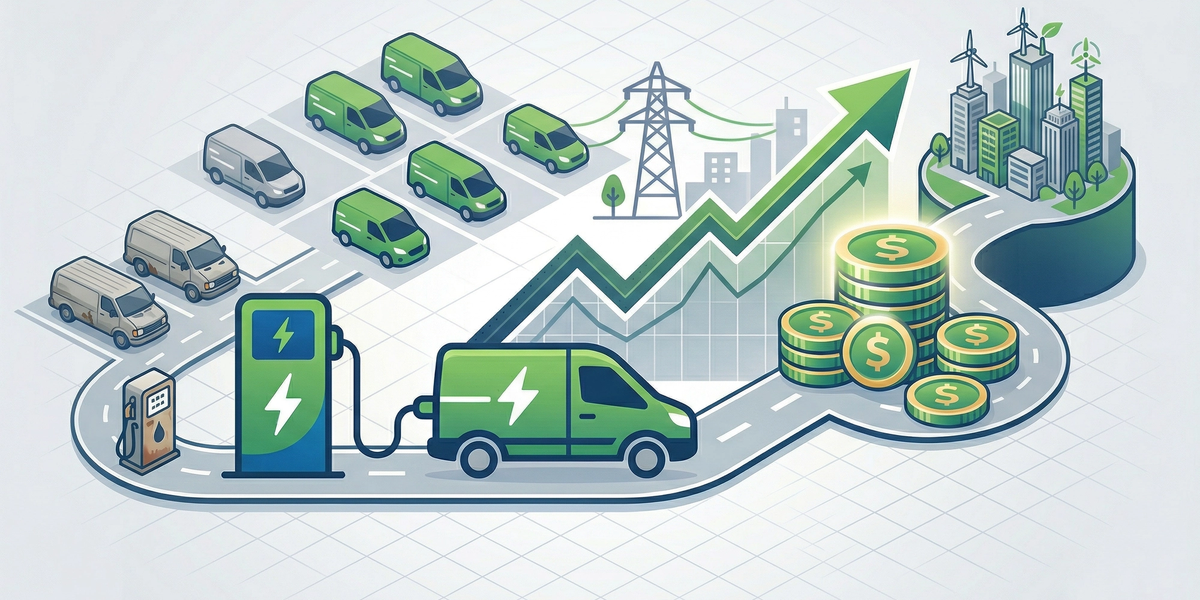
Electric delivery van at charging station with rising ROI, representing fleet electrification savings.
Fleet managers today face growing pressure to deliver exceptional service while managing costs and maximizing efficiency. Fleet electrification is one of the most compelling responses to that pressure, and it is gaining momentum across the transportation sector worldwide. Electric vehicles currently make up just 1.5% of the global fleet, but the growth trajectory is clear.
Switching from gas powered vehicles and fossil fuels to zero emission vehicles involves upfront costs, but the total cost of ownership more than compensates over time. Electricity costs 60 to 80% lower than diesel or gasoline per kilometre, EVs deliver 30 to 50% lower operational expenses over their lifetime compared to ICE vehicles, and fuel and maintenance savings compound quickly across a large commercial fleet. Fleet electrification also reduces greenhouse gas emissions by 30 to 90% compared to gas powered vehicles, eliminating tailpipe emissions entirely and helping businesses meet ESG and sustainability targets in the transportation sector.
To fully realize the fleet electrification ROI, a structured electrification strategy and careful strategic planning from the outset are essential. Here are seven practical steps to maximize savings and minimize risks when building out your electric fleet.
1. Optimize Your EV Selection
Choosing the right fleet EVs for your commercial fleet is the starting point for long-term savings. The wrong vehicle model for your duty cycle can undermine your entire fleet electrification plan.
Key factors to evaluate across electric options:
- EV ranges: Ensure vehicles meet daily mileage requirements with a buffer. Most urban and regional routes fall comfortably within current EV ranges. Predictable return-to-base routes under 150 miles per day are ideal for electric fleet vehicles using overnight depot charging.
- Duty cycles: How is the vehicle used during the day? High stop-and-go frequency, towing requirements, and cold weather conditions all affect battery performance across various factors.
- Vehicle type: Match electric options to operational roles, from last-mile delivery vans to service trucks to passenger shuttles.
- Total cost of ownership: Factor in purchase price, fuel and maintenance costs, potential electrical upgrades to your depot, and resale value to assess long-term savings accurately.
2. Build a Smart Charging Strategy
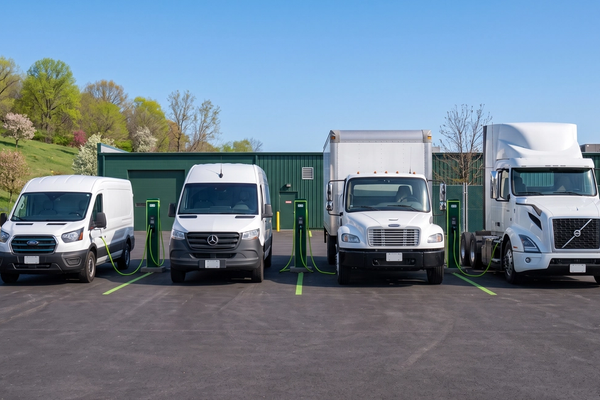
An effective fleet charging plan keeps your electrified fleet operational and cost-efficient. Depot charging is the foundation of most successful fleet electrification strategies.
Depot charging for commercial fleets: Most fleet operators find that depot charging overnight is the most cost-effective approach. Predictable return-to-base routes allow fleet managers to use Time of Use (ToU) optimization, scheduling ev charging during off-peak hours to lower energy costs by 35 to 60%. This avoids peak demand charges and maximizes energy efficiency across all charging stations.
Public charging works for flexibility but comes with higher electricity rates, wait times, and limited control over charging times. Few public charging stations have pull-through room for cargo vans and trucks, so public options for larger commercial fleets are more limited.
Home charging is convenient for remote drivers but creates challenges around cost tracking and energy data collection for carbon credit programs.
Infrastructure planning is a critical part of any fleet electrification plan. Account for potential electrical upgrades to your depot site, charger type selection, and grid capacity. Installing DC fast chargers can cost $18,000 to $350,000 per port depending on various factors including site conditions and electrical capacity. For large deployments, work with experts early to navigate permitting and local utility coordination. According to the US Department of Energy, electric vehicles have significantly lower maintenance and fuel costs than ICE alternatives across all commercial vehicle classes.
3. Take Advantage of Incentives
Government incentives at the federal, provincial, and local levels provide financial support to ease the upfront costs of fleet electrification. A well-structured electrification strategy captures every available layer of support.
Types of financial support available:
- Rebates: Direct discounts on zero emission vehicles and charging infrastructure at point of purchase
- Tax credits: Federal and state incentives for eligible electric fleet vehicles and EV charging equipment
- Grants: Program funding for fleet electrification projects, with eligibility varying by jurisdiction
- Local incentives: Utility programs and municipal grants that stack on top of federal and provincial support
- Carbon credits: Fleet operators who manage their own charging infrastructure can earn ongoing carbon credit revenue under Canada's Clean Fuel Regulations, creating long-term savings beyond the initial incentive
4. Monitor and Minimize Maintenance Costs
Reduced maintenance costs are one of the most consistent and well-documented benefits of fleet electrification. Electric fleet vehicles reduce maintenance costs by 30 to 50% over five years compared to gas powered vehicles, driven by fewer moving parts, no oil changes, no exhaust system repairs, and regenerative braking that extends brake life significantly.
EVs cost roughly 3 to 4 cents per km to operate compared to 11 to 12 cents per km for gasoline vehicles. The maintenance savings on an electrified fleet compound quickly across larger commercial fleets.
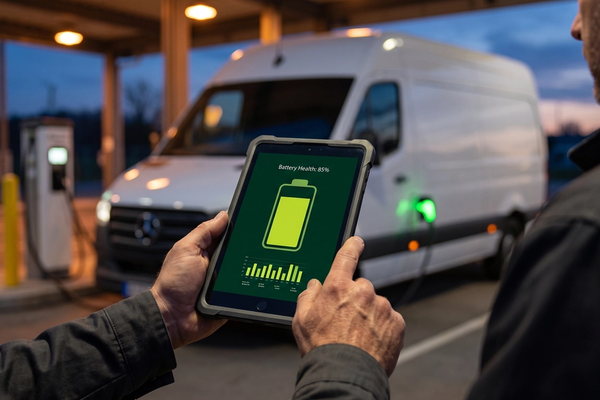
To maximize maintenance savings, use telematics to monitor vehicle health, battery performance, and charging behavior. According to Geotab's EV battery health research, modern EV batteries degrade at approximately 2.3% per year under typical fleet conditions, giving fleet managers predictable long-term battery performance data for operational planning. Predictive maintenance scheduling based on real-time diagnostics reduces unplanned downtime by up to 30%, replacing emergency repair costs with planned service.
5. Focus on Driver Training
How drivers operate your electric fleet vehicles directly impacts both fleet electrification ROI and vehicle lifespan. Teaching drivers to accelerate smoothly, maintain steady speeds, and use regenerative braking helps save energy and increase EV ranges on every route.
Fleet managers who invest in driver training for electric options see measurable improvements in energy efficiency and battery performance. Some fleet operators report drivers actively competing to return to base with more remaining range on equivalent routes, driving engagement with efficient driving habits across the electrified fleet.
Drivers should also learn fleet charging best practices including how to use depot charging systems, how to avoid unnecessary use of public charging stations, and how to maximize ev batteries lifespan through proper charging habits. Reducing noise pollution in urban areas is another benefit drivers notice quickly compared to fossil fuels-powered vehicles.
6. Use Fleet Management Software
Modern fleet management software is essential for optimizing fleet electrification ROI and improving cost-effective operations across all fleet vehicles. A strong fleet electrification plan includes a technology layer from day one.
Key capabilities for commercial fleets and fleet operators:
- Battery state of charge: Real-time ev charging status across all vehicles
- Battery performance monitoring: Detect ev batteries issues early to minimize downtime
- Energy efficiency analysis: Identify inefficiencies in fleet charging patterns to reduce costs
- Predictive maintenance: Avoid unexpected breakdowns with early servicing alerts
- Route optimization: Save fuel and energy with traffic and route analytics
- EV ranges prediction: Use GPS-based data to improve trip planning for electric fleet vehicles
- Carbon credits tracking: Generate verified data for carbon credit programs and ESG reporting
According to the Fleetio State of Fleet Management Report, more than two-thirds of fleet professionals now rely on integrated telematics and fleet management platforms to cut downtime and streamline operations across their entire fleet.
7. Plan for Long-Term Scalability
Fleet electrification is not a one-time switch. It is an ongoing process that requires strategic planning from the start. A successful transition means building an electrification strategy and infrastructure planning approach that scales with your fleet.
Start with a pilot program to test your fleet electrification plan with a small number of fleet EVs, gather operational data, and refine your approach before scaling. Use those insights to expand your electrified fleet confidently, avoiding costly mistakes and potential electrical upgrades that were not anticipated early.
Electricity prices are more stable than fossil fuels, helping fleet managers forecast operating costs with greater certainty across commercial fleets. As your zero emission vehicles fleet grows, your fleet charging infrastructure, depot charging capacity, and energy management approach will evolve to match.
Ready to Electrify Your Fleet?
Fleet electrification ROI is substantial, but success depends on careful planning and the right electrification strategy from the outset. By selecting the right zero emission vehicles, building a cost-effective fleet charging plan, leveraging government incentives and carbon credits, and using modern fleet management software, fleet operators can maximize long-term savings, reduce greenhouse gas emissions, and deliver exceptional service across all commercial fleets.
7Gen works with Canadian fleet managers through every step of a successful transition, from fleet electrification plan development and vehicle selection to depot charging infrastructure, telematics, and ongoing energy management. For a full breakdown of how to calculate the financial case for your specific fleet, see How to Calculate EV Fleet Total Cost of Ownership. For a step-by-step transition framework, see Planning and Executing an EV Fleet Transition.
→ Use our free TCO Calculator to compare EV vs. ICE fleet costs for your operation.
Ready to Electrify Your Fleet?
Get expert guidance on transitioning to electric vehicles. Our team is ready to help.
Get a Quote