5 Common Myths about Electric Trucks
Thinking of switching your truck fleet to electric vehicles (EV), but not sure it’s the right move? Before you make any decisions, it’s important to understand the facts about EVs. Even as more and more businesses electrify their fleets, there are st
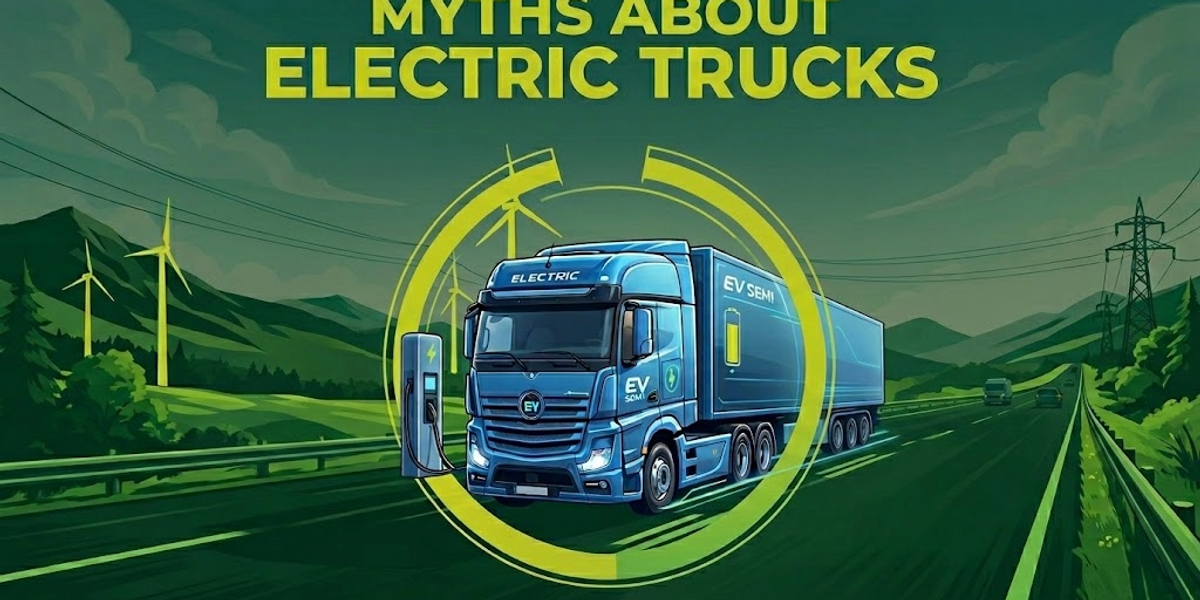
Myths about electric trucks
Canadian fleet managers and potential buyers researching commercial fleet electrification still run into the same electric truck myths, even as the technology matures and adoption grows. Modern electric vehicles have advanced significantly in recent years, and many of the concerns that once gave fleet operators pause no longer hold up. Here are five of the biggest misconceptions about electric trucks and what informed decisions look like when you have the full picture.
Myth 1: Electric Trucks Do Not Have Enough Range
What the Range Data Actually Shows
Range anxiety is one of the most common concerns fleet managers raise when evaluating an EV truck. The reality is that modern electric trucks are built for the demands of commercial operations, and EV ranges have improved substantially across all vehicle classes.
Over 90% of freight travel in Canada and the US falls under 800 km per day. Range varies by truck class and configuration depending on several factors including battery size, load, and driving conditions. Class 4 and 5 medium duty commercial vehicles such as the RIZON e16 achieve between 177 and 257 km on a single charge, while larger class 8 trucks with larger batteries and extended range battery options can reach 400 to 500 km or more. Around 60% of medium and heavy duty electric vehicles exceed average daily route requirements. Compared to light duty vehicles, heavy duty trucks have larger batteries that result in longer charging times but also significantly more energy available per charge.
Cold weather and extreme temperatures affect battery performance and battery capacity. In Canadian winters, expect a range reduction of roughly 10% to 20%. Cooling systems and battery preconditioning help manage battery temperature, while air conditioning and heating draw more energy in extreme temperatures. Towing capacity requirements also reduce EV ranges, so fleets with regular towing duties should request real-world data specific to their load profiles.
Most fleets running regional routes will still have sufficient range to complete daily operations without a mid-shift stop.
How Fleet Managers Can Protect Range
- Use regenerative braking to recover energy on city driving and stop-and-go routes
- Schedule overnight charging so heavy duty trucks start every shift at full charge
- Monitor tire pressure and driving conditions, as both affect energy consumption and battery capacity
Canada's public charging infrastructure is expanding rapidly. As of early 2026, Canada has over 33,700 public charging ports across more than 12,900 charging stations, including more than 8,800 DC fast charging ports, a 28% increase year-over-year. To find DC fast charging locations near your routes, use the Natural Resources Canada Electric Charging and Alternative Fuelling Stations Locator.
Myth 2: Electric Trucks Cost Too Much
Total Cost of Ownership vs Sticker Price
The upfront cost of an EV truck is higher than a combustion engines equivalent, often two to three times more. But purchase price is only one part of the equation. Total cost of ownership tells a more complete story.
Electric trucks are significantly cheaper to fuel and maintain. Energy efficiency for electric trucks can reach 70% to 80%, while diesel trucks lose around 75% of energy to heat and friction. Research from Georgia Tech found electric trucks cost at least 20% less to operate than diesel counterparts. The typical payback period is three to five years. For a full breakdown, see EV vs ICE Maintenance Costs: What Fleet Operators Need to Know and The TCO Reality: Why the Sticker Price of EV Fleets Is Deceiving.
Canadian Incentives That Change the Math
Canadian fleet managers have access to purchase incentives through the federal Incentives for Medium and Heavy-Duty Zero-Emission Vehicles (iMHZEV) program, which provides rebates of up to $200,000 per vehicle for eligible commercial fleets at the point of sale. Fleet managers should verify current program status directly with Transport Canada, as the program was scheduled to run until March 31, 2026 subject to available funding. Provincial programs in British Columbia, Quebec, and Ontario offer additional support up to a combined maximum of 75% of a vehicle's purchase price.
When fuel savings, lower maintenance costs, and available incentives are factored together, electric trucks are cost-competitive with diesel on a total cost of ownership basis.
Myth 3: The Power Grid Cannot Handle Electric Trucks
Why Overnight Charging Works in Everyone's Favour
Most commercial electric truck charging happens overnight, when residential electricity demand is at its lowest. Nighttime charging slots naturally into periods of excess grid capacity rather than competing with peak demand. Studies consistently show the electricity grid can absorb growing demand through modest increases in renewable energy sources and smart charging infrastructure investment.
Vehicle-to-Grid: Electric Trucks as a Grid Asset
Grid operators are developing vehicle-to-grid programs, where electric trucks feed energy back during peak periods, functioning as flexible storage rather than purely drawing power. This means a well-managed fleet charging system is not a burden on the power grid. It can be an asset. Canada's charging infrastructure grew by over 24% in the 12 months to March 2025, and investment continues to expand capacity across all major corridors.
Myth 4: Electric Truck Batteries Create Too Much Waste
The Lifecycle Emissions Picture
Battery production does carry an environmental footprint. But the full lifecycle picture is more positive than critics suggest.
Research from Renault Trucks (in English) found that CO2 and GHG emissions generated during battery production are offset relatively quickly once an electric truck enters service. Battery production for one of their commercial electric trucks generates around 20 tonnes of CO2, while the same truck saves approximately 30 tonnes of CO2 per year compared to a diesel equivalent. That puts the carbon payback period at under a year. For urban delivery fleets with frequent stops, electric trucks reduce greenhouse gas emissions and tailpipe emissions by roughly 50% compared to diesel, even when accounting for electricity production. Zero emissions at the tailpipe also means cleaner air in urban areas, which is increasingly relevant to Canadian municipal procurement and logistics contracts.
Second Life and Recycling
Most batteries in electric vehicles are designed to last the full lifespan of the vehicle. When batteries reach end of vehicle life, many retain enough battery capacity for a second life as stationary energy storage. An MIT study published in Applied Energy found that used EV batteries can serve profitably as backup storage for grid-scale solar installations for more than a decade. Recycling programs are advancing rapidly, recovering critical materials including lithium, cobalt, and nickel for reuse in new batteries. Electric vehicle battery replacements due to failures are also uncommon, with recent data showing an average failure rate of only 2.5%.
Myth 5: Electric Truck Charging Is Complicated
Depot Charging: The Standard Fleet Model
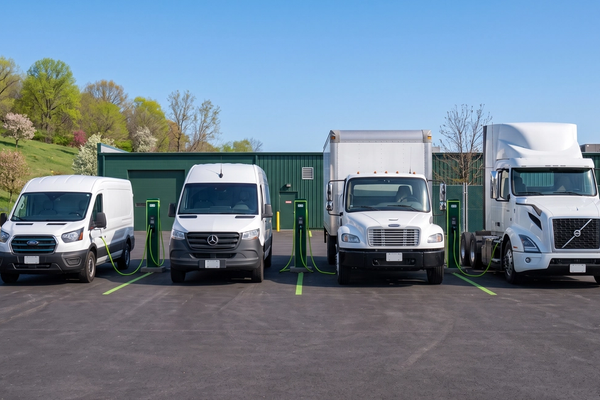
Commercial fleet charging is simpler than most people expect. The standard model is overnight charging at a depot. Drivers charge an electric truck by plugging in at the end of their shift, and trucks are fully charged by morning. No scheduling complexity, no fuel stops.
The slowest charging option is a standard Level 1 AC charger, which can take several hours and is impractical for commercial fleet use. Most depot operators install Level 2 AC chargers for overnight charging, which provide a reliable full charge across a standard shift. Home charging using Level 2 equipment is also an option for smaller operators. Electric vehicle chargers at this level are widely available and straightforward to install as part of a dedicated depot charging system.
Building out charging infrastructure requires planning around site assessment, electrical capacity, and permitting. Solutions like those offered by 7Gen simplify this process for Canadian commercial fleets by bundling EV charging, installation, and energy management into an all-inclusive service. For a step-by-step guide, see Electric Vehicle Charger Installation for Canadian Commercial Fleets.
Fast Charging Options for Fleets on the Move
For fleets covering long trips between depots or needing faster turnaround, Level 3 direct current fast charging stations reduce actual charging times significantly. DC fast chargers bring a truck to 80% battery capacity in 30 to 60 minutes, coinciding with mandatory driver break periods. Charging times vary depending on battery capacity, charger output, and starting state of charge. Several factors including temperature and charging system compatibility also affect actual charging times.
Canada now has more than 8,800 direct current fast charging ports across 2,570 public charging stations, forming a growing national network. EV chargers continue to be added across all major corridors at a record pace. For the large majority of fleet operations running fixed daily routes, overnight charging eliminates the need for mid-shift stops entirely.
The Bottom Line on Electric Truck Myths
Electric truck myths persist because the technology has changed faster than the information available to decision-makers.
Range is no longer a limiting factor for most Canadian commercial routes. Total cost of ownership favours electrification over a standard fleet replacement cycle. The power grid is designed to handle increased electric truck charging demand. Battery waste concerns are being addressed through second-life programs and recycling. Depot charging is operationally straightforward for fleets of any size.
Canadian fleet managers and potential buyers evaluating electric vehicles will find that the barriers are lower than the myths suggest. 7Gen works with Canadian commercial fleets through every step of the transition, from vehicle selection to charging infrastructure and ongoing energy management.
→ Compare EV range, cargo, and payload with our EV Range Comparison tool.
→ Use our free TCO Calculator to compare EV vs. ICE fleet costs for your operation.
Ready to Electrify Your Fleet?
Get expert guidance on transitioning to electric vehicles. Our team is ready to help.
Get a Quote